The Dictate of the Heart: 17th Sunday in Ordinary Time, Year A

Our Father St. Augustine has this to say: “Let our searching be such that we can be sure of finding, and let our finding be such that we may go on searching.” (The Trinity, 9.1.1).

When a person discovers something true, that discovery inspires an even greater desire to learn more rather than to stop searching. Faith and knowledge are never exhausted; they continually invite us to grow together in an endless, lifelong journey with God.

One of the ways I keep myself engaged in this continuing search for a deeper understanding of the Gospel is through writing The Dictate of the Heart. For me, every reflection is like discovering a priceless treasure hidden in God’s Word.

The first reading from the First Book of Kings reveals the humility of King Solomon when God asks him what He would like to receive. Solomon responds with profound humility. Rather than asking for riches, power, or a long life, he asks for a discerning heart and wisdom. Because of this humble request, God abundantly blesses him with the very gift he seeks.

The second reading from the Letter of St. Paul to the Romans gives us a clear reminder that responding to God’s call with love brings the assurance of His providence. God works for the good of those who love Him, calling them according to His purpose, justifying them in Christ, and ultimately sharing with them His glory.

The Gospel according to St. Matthew presents, for the third consecutive Sunday, Jesus’ teaching on the Kingdom of Heaven through three short parables: the hidden treasure, the pearl of great price, and the fishing net. Through these images, Jesus reveals that the Kingdom of God is the fulfillment of God’s saving plan—the new law that fulfills the old.

Here are some points for reflection.

First, Jesus compares the Kingdom of Heaven to a buried treasure and to a pearl of great price. These images reveal the very heart of His teaching: once we truly encounter God, we are invited to reorder our priorities. The Kingdom becomes the greatest treasure of our lives, making every sacrifice worthwhile. Discovering God is worth surrendering everything that merely satisfies us temporarily, because nothing compares with the lasting joy of belonging to Him.

Second, in the Gospel, both the man who discovers the treasure and the merchant searching for fine pearls do exactly the same thing: they sell everything they have in order to possess what they value most.

This is what we call radical detachment. It is not about giving things up simply for the sake of suffering. Rather, it is about recognizing what has the highest value. Once we truly encounter God’s presence and experience His grace, earthly ambitions, power, prestige, control, and even our anxieties lose their hold over us. They no longer occupy the center of our hearts because we have found something infinitely greater.

Third, the parable of the dragnet repeats the message of the parable of the weeds among the wheat, emphasizing the final separation between good and evil.

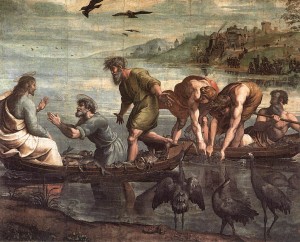
Jesus compares the Kingdom to a dragnet that gathers fish of every kind. Only when the net is brought ashore are the good fish separated from the bad. This points to the final judgment at the end of time, when the righteous will be separated from the wicked. It reminds us of the eschatological reality that awaits every human person. God’s mercy is always available today, but His justice will also prevail in the fullness of time.

Fourth, Jesus says: “Every scribe who has been instructed in the Kingdom of Heaven is like the head of a household who brings from his storeroom both the new and the old.”

As I mentioned at the beginning, Jesus’ teaching about the Kingdom points toward the new law, yet this new law does not abolish the old; rather, it fulfills it.

St. Matthew teaches us that the old and the new are not enemies. The truths of the Old Testament find their fulfillment in Christ and in the Gospel. The faithful disciple treasures both: the enduring wisdom of God’s revelation throughout salvation history and the new life brought by Jesus.

Perhaps, aside from the wisdom we hear today, this also speaks to those who struggle to let go of what is old. Many of us carry old prejudices, unhealthy attachments, painful memories, rigid mindsets, and habits that no longer lead us to God. True wisdom is not merely acquiring new ideas; it is also having the courage to release whatever prevents us from embracing the new life that Christ offers.

If you know Jesus and truly understand what He is about, then you also know that He did not come to make us materially rich. That was never His mission. Otherwise, He would simply have made everyone prosperous, and we would probably end up fighting one another over wealth and possessions.

Jesus came for one purpose: to lead us to the greatest treasure we can ever possess—the treasure hidden in our hearts, where God Himself desires to dwell.

Whatever path we choose in life, whether in business, ministry, family life, or any profession, we must never forget where our true treasure lies. Jesus reminds us, “Where your treasure is, there also will your heart be.”

So, if you truly want to know the condition of your heart, ask yourself one simple question: Where is my treasure?

May God bless you.

Fr. Arlon, OSA

Trnaslation in Cebuano Language:

Ang atong Amahan nga si San Agustin nagaingon:

“Mangita kita sa paagi nga makasiguro kita nga makakaplag; ug sa dihang makakaplag na kita, padayon gihapon kita sa pagpangita.” (De Trinitate, 9.1.1).

Kung ang usa ka tawo makadiskobre sa kamatuoran, dili kana maoy katapusan sa iyang pagpangita. Hinunoa, kini mopukaw kaniya sa mas lawom nga tinguha sa pag-ila pa sa Dios. Ang pagtuo ug ang kahibalo dili gayod mahurot; padayon silang nagdapit kanato sa pagtubo diha sa walay katapusang panaw uban sa Dios.

Usa sa akong mga paagi sa pagpadayon niining pagpangita alang sa mas lawom nga pagsabot sa Ebanghelyo mao ang pagsulat sa The Dictate of the Heart. Alang kanako, ang matag pagpamalandong sama sa pagkaplag sa usa ka bililhong bahandi nga gitago sulod sa Pulong sa Dios.

Ang unang pagbasa gikan sa Unang Basahon sa mga Hari nagpadayag sa dakong pagkamapaubsanon ni Haring Solomon. Sa dihang gipangutana siya sa Dios kon unsa ang iyang gusto nga madawat, wala siya mangayo og bahandi, gahum, o taas nga kinabuhi. Hinunoa, nangayo siya og masinabtanon nga kasingkasing ug kaalam aron makadumala sa katawhan sumala sa kabubut-on sa Dios. Tungod niining mapaubsanon nga hangyo, gipanalanginan siya sa Dios dili lamang sa kaalam, kondili usab sa daghang grasya nga wala gani niya pangayoa.

Ang ikaduhang pagbasa gikan sa Sulat ni San Pablo ngadto sa mga taga-Roma nagpahinumdom kanato nga ang pagtubag sa tawag sa Dios uban sa gugma naghatag kanato og kasigurohan sa Iyang pag-atiman. Ang Dios nagabuhat sa tanang butang alang sa kaayohan niadtong nahigugma Kaniya. Gitawag Niya sila sumala sa Iyang katuyoan, gipakamatarong pinaagi kang Kristo, ug sa katapusan ipaambit Niya kanila ang Iyang himaya.

Ang Ebanghelyo sumala kang San Mateo, sa ikatulong sunod nga Domingo, nagpadayon sa pagtulon-an ni Jesus mahitungod sa Gingharian sa Langit pinaagi sa tulo ka mugbong sambingay: ang gitagong bahandi, ang mahalong perlas, ug ang pukot sa pagpangisda. Pinaagi niini nga mga sambingay, gipadayag ni Jesus nga ang Gingharian sa Dios mao ang katumanan sa plano sa Dios alang sa kaluwasan sa katawhan—ang bag-ong balaod nga nagtuman ug naghingpit sa daang balaod.

Ania ang pipila ka mga punto alang sa atong pagpamalandong.

Una, gitandi ni Jesus ang Gingharian sa Langit sa usa ka gitagong bahandi ug sa usa ka mahal kaayong perlas. Kini nga mga hulagway nagpadayag sa kasingkasing sa Iyang pagtulon-an. Sa dihang tinuod natong mahimamat ang Dios, gidapit kita sa pag-usab sa atong mga prayoridad. Ang Gingharian mahimong labing bililhon nga bahandi sa atong kinabuhi, nga naghimo sa tanang sakripisyo nga takus buhaton. Ang pagkaplag sa Dios takus isalikway ang tanang butang nga temporaryo lamang makahatag og kalipay, kay walay bisan unsa nga ikatandi sa malungtarong kalipay nga atong maangkon pinaagi sa pagpakig-uban Kaniya.

Ikaduha, sa Ebanghelyo, ang tawo nga nakakaplag sa bahandi ug ang negosyante nga nangita og mahalong mga perlas pareho ra ang ilang gibuhat: ilang gibaligya ang tanan nilang kabtangan aron maangkon ang labing bililhon alang kanila.

Mao kini ang atong gitawag nga radikal nga pagkahimulag sa mga butang sa kalibutan. Dili kini nagpasabot nga isalikway nato ang mga butang aron lamang mag-antus. Hinunoa, kini nagpasabot sa pag-ila kung unsa ang adunay labing taas nga bili. Sa dihang tinuod natong masinati ang presensya sa Dios ug ang Iyang grasya, ang kalibutanong ambisyon, gahum, dungog, tinguha sa pagpugong sa uban, ug bisan pa ang atong mga kabalaka, mawad-an sa ilang gahum ibabaw kanato. Dili na sila mahimong sentro sa atong kasingkasing, tungod kay nakakaplag na kita sa usa ka bahandi nga labaw pa sa tanan.

Ikatulo, ang sambingay bahin sa pukot nagpadayon sa mensahe sa sambingay bahin sa sagbot taliwala sa trigo. Ang duha naghatag og gibug-aton sa katapusang pagbulag sa maayo ug sa dautan.

Gitandi ni Jesus ang Gingharian sa usa ka pukot nga nakadakop og nagkalainlaing matang sa isda. Sa dihang gidala na kini sa baybayon, didto lamang gibulag ang maayong isda gikan sa dili maayo. Kini nagpunting sa katapusang paghukom sa katapusan sa panahon, diin ang mga matarong pagabulagon gikan sa mga dautan. Nagpahinumdom kini kanato nga ang matag tawo adunay atubanganon nga katapusang paghukom. Ang kalooy sa Dios anaa kanunay nga bukas alang kanato karon, apan sa tukmang panahon ang Iyang hustisya usab matuman.

Ikaupat, miingon si Jesus:

“Ang matag eskriba nga natudloan mahitungod sa Gingharian sa Langit sama sa usa ka agalong balay nga nagpagawas gikan sa iyang tipiganan sa mga daan ug sa mga bag-ong bahandi.”

Sama sa akong gihisgutan sa sinugdanan, ang pagtulon-an ni Jesus bahin sa Gingharian nagtudlo ngadto sa bag-ong balaod. Apan kini nga bag-ong balaod wala magwagtang sa daang balaod; hinunoa, kini mao ang katumanan ug paghingpit niini.

Gitudloan kita ni San Mateo nga ang daan ug ang bag-o dili magkaaway. Ang mga kamatuoran sa Daang Tugon nakakaplag sa ilang hingpit nga katumanan diha kang Kristo ug sa Ebanghelyo. Ang matinumanong tinun-an nagabili sa duha: ang walay katapusang kaalam sa pagpadayag sa Dios sulod sa kasaysayan sa kaluwasan ug ang bag-ong kinabuhi nga gidala ni Jesus.

Tingali, gawas sa kaalam nga atong nadungog karong adlawa, kini usab usa ka mensahe alang niadtong naglisod sa pagbiya sa mga daang butang. Daghan kanato ang nagdala gihapon og daang pagpihig, dili himsog nga pagkapit sa mga butang, masakit nga mga handumanan, hugot nga panghunahuna, ug mga batasan nga dili na makapaduol kanato sa Dios. Ang tinuod nga kaalam dili lamang ang pag-angkon og bag-ong mga ideya; kini usab ang pagbaton sa kaisog sa pagbiya sa bisan unsang butang nga makababag kanato sa pagdawat sa bag-ong kinabuhi nga gitanyag ni Kristo.

Kon nailhan na nato si Jesus ug nasabtan gayod nato ang Iyang misyon, masabtan usab nato nga wala Siya mianhi aron himoon kitang dato sa materyal nga mga butang. Dili kana mao ang Iyang katuyoan. Kay kon mao pa, mahimo unta Niyang adunahan ang tanan, ug tingali mag-away-away lamang kita tungod sa bahandi ug mga kabtangan.

Mianhi si Jesus alang sa usa lamang ka katuyoan: ang pagdala kanato ngadto sa labing bililhon nga bahandi nga atong maangkon—ang bahandi nga gitago sulod sa atong kasingkasing, diin ang Dios mismo nagatinguha sa pagpuyo.

Busa, bisan unsa pa ang atong pilion nga dalan sa kinabuhi—sa negosyo, ministeryo, kinabuhi sa pamilya, o bisan unsang propesyon—ayaw gayod nato kalimti kon diin nahimutang ang atong tinuod nga bahandi. Gipahinumdoman kita ni Jesus:

“Kay hain ang imong bahandi, atua usab ang imong kasingkasing.”

Busa, kon gusto gayod nimo mahibaloan ang tinuod nga kahimtang sa imong kasingkasing, pangutan-a ang imong kaugalingon niining yano apan lawom nga pangutana:

Asa man ang akong bahandi?

Panalanginan kamo sa Dios.  

P. Arlon, OSA
The Dictate of the Heart: 16th Sunday in Ordinary Time – Year A

Today is the 16th Sunday in Ordinary Time, Year A. For more than 20 years, I have been blessed with the opportunity to attend the 162nd Annual Patronal Fiesta of Our Lady of Mount Carmel, the parish where I was brought to the faith, learned the basic catechism, and served as an altar boy under several parish priests who were assigned there. My vocation has been nurtured through the loving intercession of Our Lady of Mount Carmel and St. Joseph. Devotion to these two great saints has been instrumental in shaping our family’s piety, deep faith, and Catholic spirituality.

As we have heard in today’s three readings, let us begin our reflection with the first reading from the Book of Wisdom. This passage reminds us that there is no other God but Him alone who cares for all of us. He judges with justice and gives us the strength to do what is right because He shows mercy to those under His rule. Whenever anyone doubts His power, He reveals His strength with justice and kindness. He corrects those who are proud, yet He never fails to teach His people to be compassionate toward others. By acting in this way, God gives His children the wonderful hope of repentance and conversion from sin.

The second reading, taken from the Letter of St. Paul to the Romans, reminds us that although we are weak, the Holy Spirit comes to help us. There are moments when we experience spiritual dryness and weakness, making it difficult to pray. At times, we do not even know what to pray for. Yet the Holy Spirit intercedes for us with groanings too deep for words. God knows what is in our hearts and minds because the Holy Spirit truly prays within us and for us.

This knowledge of faith is possible only through the Holy Spirit. To remain in touch with the words of Christ, we too must be touched by the Holy Spirit. He comes to meet us and continually kindles faith within us.

Today’s Gospel presents two parables from St. Matthew. At first glance, they appear similar to last Sunday’s Gospel about the sower. However, today’s focus is on the parable of the wheat among the weeds and the parable of the mustard seed. Since these parables concern the Kingdom of God, they reveal the reality that corruption and evil can exist even within the Kingdom of God on earth. The coexistence of good and evil is a reality we must acknowledge. Through the guidance of the Holy Spirit, we are led to a deeper understanding of this mystery.

First, the Gospel states that “a farmer scattered good seed in his field. But while everyone was sleeping, an enemy came and scattered weed seeds among the wheat and then left.” Jesus beautifully reveals the Kingdom of God by manifesting both God’s mercy and His justice. Yet the presence of darkness and the undeniable force of evil remain constant threats and challenges. We know that, in the end, God alone can separate the wheat from the weeds. On our part, we are called to greater vigilance, resistance, and determination in fighting against the disturbances, temptations, and attacks of Satan. Evil is a corruption of what is good. Nevertheless, God may permit evil for a greater good, allowing virtues such as prudence, perseverance, and fortitude to shine forth even more brightly.

Second, the Gospel narrates: “His servants asked him, ‘Do you want us to go and pull up the weeds?’ ‘No,’ he answered. ‘You might also uproot the wheat with them. Let both grow together until the harvest.’” This parable calls us to spiritual discernment and patient endurance as we navigate the complexities of good and evil in the world. We recognize that perfection is not yet found in humanity because the Kingdom of God on earth is still journeying toward its fulfillment.

The first parable teaches us not to judge prematurely, lest we harm the wheat while trying to remove the weeds. Instead, we are invited to trust God as the ultimate Judge and to devote ourselves faithfully to planting, nurturing, and watering the seeds of goodness.

The second parable emphasizes the significance of even the smallest acts of faith. Like the mustard seed, faith may begin unnoticed, yet it grows into something remarkably great, bringing shelter, hope, and life to many.

Third, Jesus tells us another parable that invites us to reflect on what will happen at the end of time to those who refuse to listen to Him. By allowing both the good and the evil to coexist, Jesus reveals His divine patience. God desires to give sinners every opportunity to repent and change their ways before the final judgment.

It is God alone who created us and continually watches over us. He lovingly guides us along the right path and allows us to experience the consequences of sin whenever we wander astray. Yet He never abandons us. Instead, He gives us hope to change, to be healed, and to receive forgiveness through His abundant mercy and love. I firmly believe that God never rejects anyone who sincerely turns back to Him. He rejoices over every sinner who returns with a humble and repentant heart.

The Sacrament of Reconciliation is one of the greatest gifts Jesus has entrusted to His Church. It is truly God’s sacrament of compassion and mercy.

It is almost unimaginable to live without anyone to forgive us through God’s mercy, for He knows that our human nature is fragile and prone to weakness and unfaithfulness.

The good seed signifies the children of God. It is this good seed that flourishes in the light of God’s grace. Let us remain attentive to where the Holy Spirit is leading us. Like leaven and like seeds, we are called to remain alive, active, and irrepressible in spreading the Kingdom of God. Gradually, we come to realize that our mission is not primarily to uproot the weeds, but to awaken and cultivate the goodness that God has planted within ourselves and in others until His Kingdom reaches its fullness.

We may ask ourselves this question: How does knowing that the Holy Spirit, the Giver of Life, dwells within me transform my prayer and deepen my spiritual life?

Loving God, thank You for the countless graces I have received through the loving intercession of Our Lady of Mount Carmel.

Blessings to everyone.

Fr. Arlon, OSA

The Dictate of the Heart: 15th Sunday in Ordinary Time, Year A

The whole Philippines is deeply interested in the ongoing impeachment trial of Vice President Sara Duterte. I can sense that our nation has become clouded by deep political divisions. Filipinos are known to be religious and prayerful people, yet I find it difficult to understand how our culture has become so saturated with distractions and temporal concerns. This becomes a serious problem whenever there is a growing dichotomy between faith and daily life.

As I reflect on our present situation, I cannot help but think of St. Augustine’s vision of building the City of God. Sadly, it seems that many people are moving in the opposite direction by investing themselves more in building the City of Man. It is heartbreaking to see how even religious people can become so preoccupied with worldly affairs that eternal realities are often forgotten.

The first reading from the prophet Isaiah reminds us that the Word of the Lord is never ineffective. Just as the rain and snow nourish the earth and make it fruitful, so too God’s Word accomplishes the purpose for which He sends it. His Word sustains us, transforms us, and keeps us focused on following the footsteps of Jesus.

In the second reading, St. Paul speaks to the Romans about suffering and hope. He reminds us that all creation eagerly awaits God’s redemption. Faith is not always as easy as we imagine. We experience trials, disappointments, and suffering in this earthly life, yet these are insignificant when compared with the glory that God has prepared for those who remain faithful. St. Paul beautifully compares our present sufferings to the pains of childbirth, reminding us that every pain endured with Christ gives birth to a greater and more glorious life.

The Gospel of St. Matthew now begins Jesus’ long discourse on the Kingdom of God through parables. Today we enter into one of His most familiar and profound teachings—the Parable of the Sower.

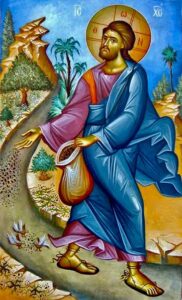
First, Jesus teaches that the Kingdom of Heaven is like seed scattered upon different kinds of soil. We should remember that although the sower generously scatters the seed everywhere, its growth depends on the condition of the soil that receives it. The farmer sows the seed without discrimination; it falls on the path, on rocky ground, among thorns, and on fertile soil alike. Yet only the seed that falls on good soil bears abundant fruit. Therefore, the true focus of the parable is not the seed or even the sower, but the condition of the soil.

Second, Jesus invites each one of us to examine our own hearts. What kind of soil am I?

Although Jesus explains the meaning of the parable toward the end of the Gospel, His explanation still invites us to engage in personal reflection. The parable is not merely meant to be understood intellectually but to be lived spiritually. Only through sincere prayer and honest self-examination can we truly discover its deeper meaning and receive its transforming grace.

The seed that falls on the path represents hearts that have become hardened and calloused. Disappointments, anxieties, fears, and painful experiences can gradually close our hearts to God’s Word.

The rocky ground represents people who receive God’s Word with enthusiasm but without deep roots. Their faith begins with excitement, but when difficulties, trials, or persecution come, they quickly lose heart. Their commitment becomes shallow and inconsistent.

The thorny ground symbolizes lives crowded with competing priorities—wealth, ambition, worldly success, and endless distractions. These slowly choke the life of grace within us and create divided hearts that struggle to remain faithful.

Finally, the good soil represents hearts that remain open, humble, receptive, and faithful. They welcome God’s Word, allow it to take root deeply, persevere through life’s challenges, and eventually bear abundant fruit. Jesus reminds us that the harvest is extraordinary—thirty, sixty, and even a hundredfold—for those who faithfully nurture the seed entrusted to them.

Third, this parable invites us to reflect not only on our personal lives but also on our communities and our relationship with God. It is not simply about individual hearts; it is also about the kind of environment we create in our families, churches, schools, and neighborhoods. We must honestly ask ourselves: What kind of soil are we cultivating for others?

The Church has the sacred responsibility of cultivating good soil where people can grow deeply rooted in God’s grace and love. She must continually proclaim the Gospel and form the faithful in sound moral living so that they may maintain a healthy balance between faith and daily life. Such formation enables Christians to remain steadfast amid political conflicts, social unrest, moral confusion, and the many crises facing our world today.

I believe the most comforting and grace-filled message of this parable is that the Sower never gives up on us. God never grows tired of scattering the seeds of healing, hope, mercy, forgiveness, love, and justice into our hearts. He patiently waits for our sincere conversion and never ceases to offer us His grace. He desires that His Word take deep root in our lives and bear lasting fruit for His Kingdom.

Jesus concludes by saying, “Whoever has ears ought to hear.” May we humbly listen to His voice, open our hearts to receive the seed of His Word, and allow it to transform us into faithful disciples who bear abundant fruit for the glory of God.

May this impeachment trial become fertile soil for the good seed of God’s truth, justice, and righteousness. May the Lord uproot every seed of lies, corruption, hatred, and darkness, so that evil may find no place to take root in our nation. Let God’s will prevail, and may this trial bear the fruits of truth, accountability, healing, and lasting peace for the Filipino people.

God bless you.

Fr. Arlon, OSA

The Dictate of the Heart: 14th Sunday in Ordinary Time, Year A

Today is the 14th Sunday in Ordinary Time, Year A, the first Sunday of the month of July. For Pope Leo XIV and the whole Church, this week has presented a difficult challenge involving a group of priests known as the Society of St. Pius X (SSPX), founded by Archbishop Marcel Lefebvre in 1970.

On July 1, 2026, at Ecône, the Lefebvrian movement ordained four new bishops without the permission and pontifical mandate of the Holy Father. This was an act of direct disobedience. Despite the Holy See’s persistent invitation to dialogue in order to promote unity and communion, the SSPX remained defiant.
In Switzerland, the four bishops were illicitly ordained, resulting in latae sententiae—an automatic excommunication. SSPX Superior Davide Pagliarani declared, “On a historic day, the possible sanctions or censures against this act have no value to us.” Those words reflected a condescending attitude that displayed little respect for the authority of the Church.

This defiance against Pope Leo XIV is an act of grave disobedience that the Holy See judges to be schismatic, involving “the refusal of submission to the Supreme Pontiff” (Canon 751) through the ordination of bishops without a pontifical mandate, an act forbidden by canon law.
St. Augustine, in Sermon 131, states, “Roma locuta est; causa finita est” (“Rome has spoken; the case is finished.”). He was emphasizing the authority of the Apostolic See and the principle that the decisions of councils receive their definitive authority through communion with the Bishop of Rome.

The Apostolic See subsequently issued a decree concerning the six SSPX bishops, together with the clergy and lay faithful directly involved in the schismatic act. The Holy See judged this to be an act of schism involving “the refusal of submission to the Supreme Pontiff” (Canon 751) by carrying out an act expressly forbidden by canon law, namely the ordination of bishops without a papal mandate (Canon 1387). In other words, “Rome has spoken; the case is closed.”

This unfortunate event invites us to return to the consoling words of Jesus in today’s Gospel:
“Come to me, all who labor and are burdened, and I will give you rest.”
These words reveal God’s infinite mercy and love, touching our hearts and inviting us to find true solace through today’s Sacred Scriptures.

In the first reading from Zechariah, the prophet describes the coming of God’s humble King. God triumphs over His enemies not through aggression or violence but through humility, justice, and peace. The reading reminds us that God remains faithful to His covenant and that He strengthens, supports, and raises up those who trust in Him. It also teaches us that obedience to God and to the authority He has established in His Church leads to authentic peace.

In the second reading, St. Paul reminds the Romans and us that through the suffering, death, and Resurrection of Jesus Christ we have received new life in the Holy Spirit. We are no longer called to live according to the flesh but according to the Spirit, who unites us in one faith, one Lord, and one baptism.

The Gospel highlights Jesus’ tender care for the humble and the weary. In St. Matthew’s Gospel, Jesus is the Divine Teacher and Healer who fulfills the promises of God. Let us reflect upon this Gospel with open hearts by considering three important points.

First, through His prayer to the Father, Jesus reminds us that He alone reveals the Father to us. Humility and gentleness are the virtues He teaches, while rest and freedom from life’s burdens are the gifts He promises. Every day we experience loneliness, conflict, isolation, and countless trials. Yet through prayer and faithful action, Christ gently draws us closer to His love and peace. The more we surrender to Him, the more we discover that His grace is sufficient for every burden we carry.

Second, many people mistakenly believe that once they profess faith in Christ, everything in life should immediately become easy. This is a distorted understanding of the Christian life. The Gospel never promises a life without suffering. Rather, it promises the abiding presence of Christ in the midst of suffering.

Some have sadly wandered into groups such as the SSPX, embracing paths that separate them from full communion with the Holy Catholic Church. In separating themselves from the visible unity Christ established, they also distance themselves from the fullness of ecclesial communion and the yoke that unites believers with Christ through His Church. Pride eventually leaves the soul empty because it resists the abundant river of God’s grace.

Our faith in Jesus is not magic. Neither is it merely the preservation of ancient traditions. Rather, it is a living communion with Christ Himself. Although following Jesus does not free us from every burden or pain, He asks us: “Take my yoke upon you…” To be yoked with Christ means allowing Him to carry life’s burdens with us. It means walking beside Him, sharing His mission, drawing strength from Him, and allowing Him to transform our lives. Christ does not simply do things for us; He lovingly works with us.
When we willingly take His yoke upon ourselves and walk in obedience to His teachings, we discover true rest, authentic freedom, and lasting peace. His grace shapes our attitudes, transforms our relationships, and directs our actions toward holiness.

Third, Jesus offers something that gives life its deepest meaning and purpose. He lovingly calls out: “Come to me, all you who are weary and burdened, and I will give you rest.” These words continue to echo throughout every generation.

His Holiness Pope Leo XIV, speaking to young people during his meeting with them in Rome, encouraged them with these inspiring words: “Listen to the word of Jesus… renew your way of life… build a more humane world. Serve the poor… remain united with Jesus in the Eucharist.” Only by remaining united with Christ can we find true rest and lasting peace.

The Holy Catholic Church never has been, is not now, and never will be a burden. Rather, she is the loving Mother who supports us in our relationship with God and with one another. Through the Church, Christ continually pours out His grace, strengthens us with the sacraments, and fills us with His infinite love.
How could anyone not be attracted to what Jesus offers us? Why, then, is He still ignored by so many people throughout the world?

God bless you.

Fr. Arlon, OSA