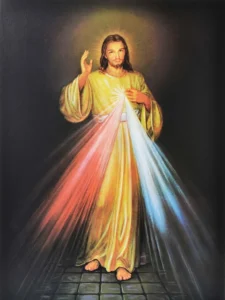
The Dictate of the Heart: 4th Sunday of Easter, Year A

  • Acts of the Apostles 2:14a, 36-41
  • Psalm 23:1-3a-6
  • 1 Peter 2:20b-25
  • John 10:1-10

    From last Sunday until Friday, I was invited to facilitate a canonical retreat for a group of 36 professed religious brothers from India, Vietnam, the Philippines, and Indonesia—held at Tabor Hill Retreat House in Cebu. It was a memorable experience to listen to their vocation stories and how they have endured and overcome trials along the way. Their gratitude and generosity in cherishing God’s gift of vocation were deeply moving. The retreat was especially meaningful as it coincided with the celebration of Vocation Sunday in the Philippines. I felt great joy journeying with them, even for just five days—humble men willing to sacrifice out of love for God.

    The 4th Sunday of Easter is known as “Good Shepherd Sunday,” also celebrated as the World Day of Prayer for Vocations.

    The first reading from the Acts of the Apostles recounts the missionary work of Paul and Barnabas, who dedicated their lives to preaching to both Jews and Gentiles. The early followers of Jesus grew in faith and number as they listened to Peter’s call to turn away from sin, and many received baptism—“three thousand persons were added that day” (v. 41).

    The second reading, from the First Letter of Peter, exhorts Christians to remain steadfast even in suffering, reminding us that we have been healed by the wounds of Christ.

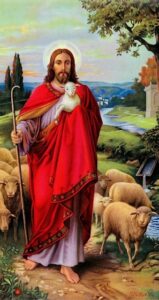
    Each year, the gospel for this Sunday is taken from John and centers on Jesus as the Good Shepherd. What insights can help us understand this image more deeply?

    First, Jesus says, “My sheep hear my voice.” In today’s world, it can be difficult to discern His voice amid the many competing voices around us—voices that promise security, freedom, comfort, and success. These voices often offer quick solutions to life’s problems, relationships, and ambitions, now amplified through technology such as artificial intelligence and digital media. It is striking how much the quality of our lives depends on which voices we choose to follow.

    At times, our lives fall into turmoil because we listen to the wrong voices, follow misguided leaders, or embrace distorted ideologies. Some may claim to echo the voice of Christ, yet act as pretenders, seeking not our good but their own gain. Jesus, the Good Shepherd, is the one we must listen to. His voice leads us toward Him; any path that does not lead to Christ ultimately leads us away from Him. We must learn to recognize His voice and respond faithfully. Do we truly listen to Him? Do we follow what He asks of us?

    Second, the gospel highlights the relationship between the shepherd and the sheep a bond rooted in familiarity and trust. Sheep recognize their shepherd and refuse to follow strangers.

    Christian leadership requires a well-grounded character and a deep relationship with Christ. Those who lead are known by their fidelity to Him. They recognize that Jesus is the gate and that an authentic relationship with Him is the foundation of their ministry.

    At the same time, true shepherds know their flock, and the flock knows them. Christian leaders are called to imitate Christ, the Good Shepherd, by being faithful to Him and genuinely caring for the community they serve.

    With Christ as our Good Shepherd—one who sincerely seeks the welfare of His flock—we have every reason to rejoice. We are blessed to belong to His sheepfold, the Church, and to be guided by the Son of God, who leads us to eternal life.

    Yet this also raises a question: Do we live up to our vocation?

    Today, more than ever, we need good shepherds modeled after Jesus Christ. Some may think that shepherds or priests are no longer necessary, but this is a misunderstanding. The role of the shepherd is not merely a profession; it is love in action. It remains an essential and life-giving presence within the Christian community.

    Please pray for more vocations to the priesthood and religious life.

    Fr. Arlon, OSA

The Dictate of the Heart: 3d Sunday of Easter, Year B

We continue to reflect on the many encounters with the Risen Lord on different occasions. Last week, I had the opportunity to give retreats to two groups of religious sisters, and I found it deeply meaningful to journey with them much like Jesus walking with the two men on the road to Emmaus. Each of us can recall how we encounter the Lord along the journey of our lives.

Today, we continue to reflect on the new hope and new life that come from the Risen Lord Jesus. We discover how His resurrection and the gift of the Holy Spirit transform our lives. Through the guidance and inspiration of the Holy Spirit, we remain in touch with the same Risen Lord, especially as we gather as a community of believers to give thanks to God remembering, celebrating, and believing all that Jesus said and did.

In the first reading from the Book of Acts, we hear the promise that the faithful followers of God will not experience corruption but will be led to the fullness of life in the presence of God. This promise is true not only for Jesus after His death but also for all who remain faithful to the Risen Lord. At our final farewell on earth, we too shall share in glorified life, just as Jesus does.

In the second reading from the First Letter of St. Peter, the newly baptized are reminded that they have been ransomed and set free from their former burdensome life, much like slaves who are freed when someone pays the price for their liberty. The price of this new life is the precious Blood of Jesus, the source of our new hope and new life in His resurrection. Filled with the power of the Holy Spirit, Peter stands up and proclaims his first sermon. The apostles are now commissioned as witnesses to Jesus and His teaching. They truly become apostles those who are sent.

Today’s Gospel from St. Luke beautifully narrates the story of two devoted disciples of Jesus who were deeply saddened by His death. Their hopes seemed lost, even though some followers had reported the empty tomb. As they walked along the road, they shared how they had hoped that Jesus would be the Messiah, the liberator. Instead, He was crucified and died on Friday. While they were walking, a third Person joined them and began to explain the Hebrew Scriptures, revealing how it was necessary for the Messiah to suffer and die in order to bring salvation, healing, and wholeness to God’s people.

This meaningful story offers several points for reflection.

First, the two disciples were seeking consolation as they grieved over what had happened to Jesus at the hands of the religious leaders of their time. As they journeyed, they encountered a fellow traveler who did not seem discouraged. Curious, they wondered if he had heard about the events of the past few days. As they spoke with this stranger, something began to change within them. Jesus listened to them patiently, perhaps in a truly synodal way, understanding their sorrow and allowing them to share their pain after the tragic events in Jerusalem.

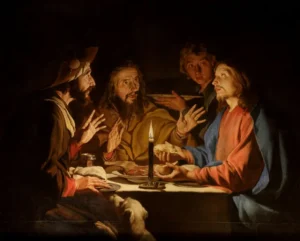
Second, when they reached their destination, they invited the stranger, saying, “Stay with us.” While they were at table, the unrecognized guest took bread, said the blessing, broke it, and gave it to them. At that moment, their eyes were opened, and they recognized their Lord and Master—the Risen Jesus. Their hearts were filled with overwhelming joy and excitement.

Whenever we experience God’s presence, our hearts too are filled with joy and enthusiasm. We long to keep Him within our hearts, for He brings an all-embracing joy, peace, love, and mercy.

Third, after the breaking of the bread and the recognition of His presence, the Lord suddenly disappeared from their sight. Yet their hearts were burning with joy, and they hurried back to Jerusalem to tell the other believers that they had encountered the Risen Lord in the breaking of the bread.

This event of the “breaking of the bread” became a way for the early Christians to remember, celebrate, and profess their belief that Jesus is alive and present among them. The early Christian community embraced the celebration of the Eucharist, meaning thanksgiving. They gave thanks to God for sending Jesus into their midst.

To celebrate the Eucharist today is not merely a reenactment of the past. Rather, it is the making present of what Jesus did on the night before He died, when He took bread, said the blessing, broke it, and gave it to His disciples, saying: “Take and eat; this is My Body.” It is not simply thinking about Jesus; it is truly experiencing His presence among us.

The Eucharist reveals the profound reality of what is happening here and now. Whenever we gather as a community of faith, we reflect on the saving events proclaimed in the Word of God. These are not merely stories from thousands of years ago. They are living accounts of how God continues to touch our lives today.

Let us reflect: Does my heart burn when I hear the Word of God proclaimed to me? What helps me to remember, to celebrate, and to believe that Jesus is truly risen and alive?

May God continue to bless you so that you may constantly rejoice in this season of Easter.

God bless you.

Fr. Arlon, OSA

The Dictate of the Heart: 2nd Sunday of Easter, Year A (Divine Mercy Sunday)

The Church’s liturgical calendar dedicates every Second Sunday of Easter to the celebration of Divine Mercy Sunday.

On April 10, 2026, the five-day Canonical Retreat of the Augustinian Sisters of Divine Love, which I had the privilege of facilitating, concluded. It was a fruitful event that renewed and strengthened their joy in community life, service, presence, and availability with Jesus, who is the source of joy in religious life. Their reflection was inspired by the Apostolic Exhortation Evangelii Gaudium of Pope Framcis. Throughout the retreat, confession and spiritual direction became essential elements of their spiritual renewal. The joy reflected on their faces after being immersed in Divine Love was truly evident. Indeed, God offers us an ocean of love and mercy.

Today’s feast of Divine Mercy, established by St. John Paul II in 2000, invites us to entrust ourselves completely to Jesus. Through the revelations given to St. Faustina Kowalska and the encouragement of St. John Paul II, the Church came to know more deeply the devotion to the Divine Mercy—Christ as the healer of our wounds and the inexhaustible fountain of mercy and grace.

The first reading from the Acts of the Apostles narrates how the early Christians grew in faith by living an intense life of prayer, fellowship, and the breaking of bread. These elements became the hallmark of their identity as followers of Jesus.

The second reading from the 1 Epistle of Peter encourages us to place our hope in the resurrection of Jesus Christ.

In the Gospel from gospel of John, we hear about one of the appearances of Jesus to His disciples after the discovery of the empty tomb. This is one of the most beautiful episodes of the resurrection narratives, particularly the moment when Thomas comes to believe after encountering the risen Lord. Several points for reflection emerge from this passage as we seek to understand the mystery of the resurrection.

First, the resurrection of Jesus remains a profound mystery. Yet His presence is not merely spiritual; it is also bodily. Like Mary Magdalene, who recognized Jesus when He called her by name, and like the two disciples on the road to Emmaus who recognized Him in the breaking of the bread, the disciples gradually came to understand that the risen Christ was truly alive. In today’s Gospel, we also see that in His resurrected body, Jesus transcends time, space, and physical barriers. He appears to the disciples even though the doors were locked. Standing before His apostles, He shows that nothing can hinder His presence. He has conquered death and is truly alive.

Second, Jesus greets His disciples with the gift of peace: “Peace be with you.” This greeting echoes the traditional Jewish greeting shalom. We can imagine how much the apostles needed to hear these words after they had abandoned Him in fear. Jesus then breathes on them and says, “Receive the Holy Spirit.” In doing so, He establishes the deep connection between the gift of the Holy Spirit and the forgiveness of sins. This moment reveals the foundation of the Sacrament of Reconciliation, the sacrament of Divine Mercy. Jesus commissions them with the words: “As the Father has sent me, so I send you.” Through this mission, the apostles and their successors continue Christ’s work of mercy and forgiveness. Jesus knows our human weakness and our constant need for forgiveness.

Third, the appearance of Jesus was astonishing to the disciples who had witnessed His crucifixion and burial. It had been a terrifying experience for them. Thomas’s doubt reflects our own human desire for tangible proof. He wanted clear evidence that the Jesus who appeared to the disciples was truly the same Jesus who had been crucified.

Thomas becomes a mirror of our own struggles with faith. Yet when he encounters Jesus, he becomes a powerful witness to the resurrection. His confession—“My Lord and my God”—is one of the most profound declarations of faith in the Gospel.

Our faith today rests upon the witness of the Church that has gone before us, beginning with Thomas and the first disciples. Through Baptism, we receive the same Holy Spirit that Jesus gave to them. We are among those whom Jesus calls “blessed,” because we believe without having seen.

It is not because of what we have done, but because of what the merciful Christ has done, that heaven is opened to us. We seek God only because God first seeks us.

God patiently waits for us and walks with us over the long journey of our lives. The pierced Heart of Jesus reveals how far His love is willing to go for humanity. His mercy is like an ocean—boundless and without limit.

May we respond sincerely to God’s invitation and confess with Thomas: “My Lord and my God.”

Jesus, I trust in You. Let us join Pope Leo praying for World’s Peace.

Fr. Arlon, OSA

The Dictate of the Heart: Easter Sunday, Year A

Alleluia, the Lord has risen.

For 30 years away from the Philippines, I have felt a deep nostalgia whenever I celebrate Holy Week. I hold beautiful memories of many religious devotions: the singing of the Passion of Christ, the huge crowds carrying beautiful palms on Palm Sunday, sacred processions of images through the streets, live Stations of the Cross, visiting seven churches after the Chrism Mass, the Seven Last Words of Jesus on the Cross profoundly expounded by priests and lay people, and the Alleluia celebration in every parish in which an angel removes the veil of the Blessed Mother from the tower while angels sing in unison, “Alleluia, the Lord has risen!” and many more.

Some of these popular religious practices were introduced by the early Augustinian missionaries to catechize the people. I have been deeply touched and inspired witnessing all these events again this year. Many Catholics continue to keep these meaningful Holy Week traditions alive, celebrating them together with their families.

Today is Easter Sunday. We are invited to pause and reflect on the scriptural readings of this Easter morning.

In the first reading from the Acts of the Apostles, we hear the story of the conversion of Cornelius, a Roman army officer who believed that the God of the Jews was the true God. He was a believer and a good man; however, he had not yet become a Jew.

St. Peter had once been strongly opposed to pagans, but his attitude changed after receiving a vision from God. Through this divine guidance, he went to the house of Cornelius, a pagan. Cornelius then explained to Peter why he had been asked to come. In their conversation, the resurrection of Jesus became the central message. This is significant because Peter’s first discourse to a pagan focused on the essential doctrine of the Resurrection, the very proof of the truth of the Christian faith. As St. Paul says, “If Christ has not risen, then our preaching is in vain, and your faith is in vain” (1 Cor 15:14).

Peter proclaimed the truth of the resurrection by testifying that he had not only seen the risen Jesus but had also spoken with Him and even eaten with Him.

In the second reading from the Letter of St. Paul to the Colossians, immersion is mentioned as the method of baptism practiced in the apostolic era. In our time, baptism may be administered in two ways: immersion or the pouring of water, accompanied by the profession of faith in the one true God—the Father, the Son, and the Holy Spirit.

Immersion, as described in this reading, gives us a powerful image of baptism in reference to Jesus Christ. Just as Christ was buried in the tomb, the person immersed in baptism symbolically dies with Christ to earthly attachments and sinful desires. Rising again from the water—the symbol of the tomb—the newly baptized person rises to new life with the Risen Christ.

We must remember that our present life is not our permanent home. Our true and lasting destiny is the eternal life prepared for us by our loving Creator. St. Paul reminds us to “set our minds on things that are above, not on things that are on earth.” We must not allow pleasures, power, or possessions to block or hinder our journey toward heaven.

The Gospel today leads us to several important truths about our belief in the resurrection.

First, the reality we proclaim on Easter is that Jesus truly died. Just as real as His death and burial is the reality of His bodily resurrection. Jesus had foretold that He would rise again. This truth emphasizes that death is not the end but the passage toward new life. The life, death, and resurrection of Jesus of Nazareth—the one whom many recognized as the hoped-for Messiah—marked a decisive moment in human history. That first day of the week, early in the morning after His crucifixion, became the turning point of history.

Second, on Sunday morning, Mary Magdalene went to the tomb of Jesus. When she discovered that the stone had been removed from the entrance, she ran to Simon Peter and the beloved disciple. They hurried to the tomb to investigate. Seeing the burial cloths lying on the ground and the burial cloth neatly folded, the beloved disciple saw and believed. The two disciples then returned home, but Mary remained behind.

Then Jesus called her by name: “Mary.” Hearing her name spoken by the risen Lord, the light of God’s glory touched her heart. This encounter gave her the courage to become the apostle to the apostles, bringing the Good News that life has conquered death. She had gone to the tomb in darkness and sorrow, but she returned illumined by the presence of the risen Jesus.

Third, all four evangelists tell the story of the resurrection, but none describes exactly how the resurrection happened. Instead, they testify that the tomb was empty on Sunday morning when the disciples came looking for His body. Jesus was no longer there—He had risen from the dead. Afterward, He appeared many times to His disciples in different circumstances. The mystery of the resurrection itself remains beyond human description.

The risen Jesus, with flesh and bones, stood before Mary Magdalene—alive forever, never to die again.

I hope that our love for Jesus will bring new life to us this Easter season and always. If we remain lost in grief or despair, we may fail to recognize the Lord who stands before us. Like the first disciples, we may struggle to grasp the world-changing truth of Jesus’ resurrection, even when He is present among us.

Belief in the resurrection of Jesus is life-changing. It compels us to speak about it. Jesus’ message and His words continue to echo through history. His teachings remain alive and powerful, and we continue to experience His presence through the power of the Holy Spirit.

Today, Catholics around the world number approximately 1.422 billion, according to the Pontifical Yearbook. The global Catholic population has grown by about 1.14%, from roughly 1.406 billion in 2023, representing about 17.8% of the world’s population. This growth reflects countless personal encounters with Jesus Christ. The risen Lord continues to convert hearts and minds—not by controlling people through religion, but by transforming lives through love.

Jesus continues to work through the Holy Spirit, establishing His Kingdom within the human heart.

This was the surprising discovery of His first followers after the resurrection and later the ascension: He was still with them. He is still here—now.

I pray that our merciful and loving God will continue to touch hearts and minds in the same way today.

To those who feel lost, you can meet Jesus anew in worship, surrounded by people whose lives are just as fragile and imperfect as your own.

This is a place of resurrection, where love still conquers death. I assure you, with certain hope born of encountering God, place your whole trust in Jesus—and you will one day share in Mary Magdalene’s joyful proclamation:
“I have seen the Lord.”

Happy Easter!

Fr. Arlon, OSA


El Dictado del Corazón:  Domingo de la Resurrección del Señor, Ciclo A

  • Hechos 10:34a, 37–43
  • Salmo 118:1–2, 16–17, 22–23
  • Colosenses 3:1–4 o 1 Corintios 5:6b–8
  • Juan 20:1–9

¡Aleluya! ¡El Señor ha resucitado!

Durante treinta años lejos de Filipinas, he sentido una profunda nostalgia cada vez que celebro la Semana Santa. Guardo recuerdos muy hermosos de nuestras devociones: El canto de la Pasión de Cristo, las grandes multitudes llevando palmas el Domingo de Ramos, las solemnes procesiones por las calles, el Vía Crucis en vivo, la visita a siete iglesias, las reflexiones sobre las Siete Palabras de Jesús en la cruz, y la alegre celebración del Salubong, cuando un ángel retira el velo de la Virgen María mientras se proclama al unísono: “¡Aleluya! ¡El Señor ha resucitado!”, y mucho más.

Muchas de estas prácticas populares fueron introducidas por los primeros misioneros agustinos como una forma de catequizar al pueblo. Aún hoy, me conmueve profundamente ver cómo estas tradiciones siguen vivas, especialmente en las familias, manteniendo encendido el espíritu de la Semana Santa.

Hoy, en el Domingo de la Resurrección del Señor, se nos invita a hacer una pausa y reflexionar sobre el significado de la Resurrección a la luz de la Sagrada Escritura.

En la primera lectura, del libro de los Hechos de los Apóstoles, escuchamos acerca de Cornelio, un centurión romano que creía en el Dios de Israel. Era un hombre bueno y piadoso, pero aún era considerado gentil. Al principio, Pedro se resistía a tratar con paganos, pero todo cambió cuando recibió una visión de Dios.

Obedeciendo esta revelación divina, Pedro fue a la casa de Cornelio. Allí proclamó el corazón del mensaje cristiano: la Resurrección de Jesucristo. Esto es significativo, porque el primer anuncio de Pedro a los gentiles se centra en la Resurrección, fundamento de nuestra fe. Como nos dice san Pablo: “Si Cristo no ha resucitado, vana es nuestra predicación y vana también la fe de ustedes” (1 Cor 15,14).

Pedro dio testimonio de que había visto al Señor resucitado, que había hablado con Él y hasta comido con Él. La Resurrección no es una idea: es un encuentro.

En la segunda lectura, de la carta de san Pablo a los colosenses, se nos recuerda el significado de nuestro bautismo. En la Iglesia primitiva, el bautismo se realizaba frecuentemente por inmersión. Hoy puede celebrarse por inmersión o por infusión del agua, junto con la profesión de fe en el Padre, el Hijo y el Espíritu Santo.

La inmersión nos ofrece una imagen poderosa: así como Cristo fue sepultado, la persona bautizada es sepultada con Él, muriendo al pecado y a los apegos del mundo. Al salir del agua, símbolo del sepulcro, resucita a una vida nueva en Cristo.

Esto nos recuerda que nuestra vida presente no es nuestro destino final. Nuestra verdadera meta es la vida eterna con Dios. Como nos exhorta san Pablo: “Pongan su mente en las cosas del cielo, no en las de la tierra”. No debemos permitir que los placeres, el poder o las posesiones nos desvíen de nuestro camino hacia el cielo.

En el Evangelio de hoy, encontramos varias verdades importantes sobre la Resurrección.

Primero, la Resurrección es real. Jesús verdaderamente murió y verdaderamente resucitó. Así como fue real su muerte y su sepultura, así también es real su Resurrección corporal. Él mismo lo había anunciado. Esto nos enseña que la muerte no es el final, sino el paso hacia una vida nueva. Su Resurrección marca el momento decisivo de la historia humana.

Segundo, muy temprano el primer día de la semana, María Magdalena fue al sepulcro. Al ver que la piedra había sido removida, corrió a avisar a Pedro y al discípulo amado. Ellos fueron y vieron el sepulcro vacío, los lienzos en el suelo y el sudario doblado aparte. El discípulo amado vio y creyó.

Pero María se quedó fuera, llorando.

Entonces Jesús la llamó por su nombre: “María”. En ese momento, todo cambió. Al escuchar su nombre en labios del Señor resucitado, su tristeza se transformó en alegría. Se convirtió en la apóstol de los apóstoles, anunciando la Buena Nueva: la vida ha vencido a la muerte.
Llegó en la oscuridad y en el dolor, pero se fue llena de luz y esperanza.

Tercero, aunque los cuatro evangelistas dan testimonio de la Resurrección, ninguno describe exactamente cómo ocurrió. El acontecimiento permanece como un misterio que supera nuestra comprensión. Pero todos coinciden en esto: el sepulcro estaba vacío y Jesús se apareció a sus discípulos, vivo, glorioso, y para no morir jamás.

El Señor resucitado se presentó ante María Magdalena, real, vivo y victorioso.

Hermanos y hermanas, la Resurrección no es solo una verdad que creemos; es una vida que estamos llamados a vivir.

Si permanecemos atrapados en el miedo, la tristeza o la desesperación, podemos no reconocer al Señor que está frente a nosotros. Como los primeros discípulos, también nosotros podemos tardar en comprender, incluso cuando Él ya está presente.

Pero la fe en la Resurrección lo cambia todo. Nos impulsa a dar testimonio, a anunciar y a vivir con esperanza. Jesús no es una figura del pasado: está vivo. Su palabra sigue resonando en la historia, y su presencia permanece con nosotros por medio del Espíritu Santo.

Hoy, la Iglesia continúa creciendo, con más de 1.4 mil millones de católicos en el mundo. Esto no es solo un número, sino el signo de innumerables encuentros personales con Cristo resucitado. Él sigue transformando corazones, no por la fuerza, sino por el amor.

Los primeros discípulos descubrieron algo sorprendente: incluso después de la Resurrección y la Ascensión, Jesús seguía con ellos.
Y Él sigue con nosotros, aquí y ahora.

Pido a Dios, rico en misericordia, que toque nuestros corazones hoy, como lo hizo con María Magdalena y con los primeros discípulos.

A quienes se sienten perdidos: pueden encontrarse de nuevo con Jesús, en la oración, en la Eucaristía y en esta comunidad de fe, donde caminamos juntos en medio de nuestra fragilidad y esperanza.

Este es un lugar de Resurrección, donde el amor vence a la muerte.
Con una esperanza firme, los invito: pongan su confianza en Jesús. Y un día, también ustedes podrán proclamar con alegría las palabras de María Magdalena:
“¡He visto al Señor!”

¡Feliz día de la Resurrección del Señor!

Fr. Arlon, OSA