The Dictate of the Heart: 4th Sunday of Advent, Year B

Today we are encouraged to come twice to the church to fulfill our obligation. It is the last Sunday of Advent, and the Christmas Vigil starts at 4 pm, followed by 6 and 9 in the evening. In this remaining time of Advent, we are called to intense and quiet prayer with the energy to respond to our availability to God.

Let us reflect on the readings today. The first reading from the second book of Samuel narrates to us about the relaxing experience of King David having returned the “Ark of the Covenant” to the Holy City Jerusalem after several wars in order to secure the “Ark” containing the book of Torah. In reverence to the Ark, David is contemplating on building a temple expressing this holy presence, while the Prophet Nathan receives a message from God that the house David was thinking would mean the beginning of his descendants, where the coming Messiah sprung and formed from his lineage. Basically Jesus is the descendant of King David as prophesied. David’s dream of making a house has turned into the house of the people of God, the new house with a family line which will lead from King David’s lineage directly to the coming of the Messiah, Jesus Christ. This is indeed the promise of God to David that a royal dynasty will succeed him and that his throne will last forever.

The second reading from the letter of St. Paul to the Romans expresses that, “the revelation of the mystery that was kept secret for long ages,” becomes a proclamation of the gospel of Jesus for all people, including the Gentiles. St. Paul worked hard for the fulfillment of these prophetic words “to the command of the eternal God, made known to all nations to bring about the obedience of faith.” We cannot do it alone; we must cooperate with the grace of God.

The gospel from St. Luke is about the Annunciation to Mary. An angel reveals God’s message that Mary will have a special role to play in the coming of the promised Messiah to save the world. The message becomes public only when the angels, shepherds, wise men, and apostles finally announce to the whole world with joy and peace about Jesus’ birth.

What would be our thoughts with regards to the fulfillment of God’s promise?
First, God favors Mary, but through her human response, she is troubled and frightened. That was a normal reaction. Though a virgin, her total trust in God involved humble surrender and something that involved faith that made her understand.

Second, Mary was continuously reflecting, listening, and pondering on what the angel had offered and what was revealed to her. Like Mary, it is important that in every decision we make, there is a need to go through the process of discernment. There are “angel-moments” in our lives where we ignore the messenger.

Third, the messenger reveals to Mary the name and the mission of her child to be. It is so certain that as the promised Messiah, His coming is always connected to the House of God as mentioned in the first reading.

As we go through all sorts of trials and difficulties, just think about the time when Jesus was announced by an Angel to be born. God intervenes in history to breathe again new hope and to be restored through the hovering of the Holy Spirit whose power fleshes out the perfect completion of God’s plan for humanity.

Mary, as with David, was faithful to the promise of God in their wholehearted trust to the fulfillment of the “Word.” Let it be done according to your word, continues to echo in our hearts and minds that final coming of our Savior, Jesus Christ. May we let the Holy Spirit come upon us to empower us to be Christ’s holy body, the Church, in this troubled world. Let us welcome Jesus in our hearts!

God bless you.

Fr. Arlon, osa

——————————-

El Dictado del Corazón
Cuarto Domingo de Adviento, Año B

  • 2 Samuel 7:1-5,8-11,16
  • Salmo 89:2-3,4-5, 27,29
  • Romanos 16:25-27
  • Lucas 1:28-38

Hoy se nos anima a venir dos veces a la iglesia, para cumplir con nuestra obligación del último domingo de Adviento y la Vigilia Navideña. Comienza a las 4 de la tarde, seguida de las 6 y las 9 de la tarde. Durante este tiempo restante de Adviento, estamos llamados a una oración intensa y tranquila, con energía para responder a nuestra disponibilidad a Dios.

En las lecturas de hoy reflexionemos en la primera lectura del segundo libro de Samuel, que nos narra cómo el rey David se instaló en su palacio relajándose, la relajante experiencia del rey David por haber devuelto el “Arca de Dios” al Ciudad Santa de Jerusalén después de varias guerras, para asegurar el “Arca de Dios” que contiene el libro de la Torá. En reverencia al Arca, David está contemplando la construcción de un templo, expresando esta santa presencia mientras el Profeta Natán, recibe un mensaje de Dios de que la casa de David estaba pensando, significaría el comienzo de su descendencia, donde el Mesías venidero surgió y formado en la Casa de Dios. Jesús viene como descendiente de David como fue profetizado. El sueño de David de hacer una casa se ha convertido en la casa de Dios. La nueva casa con linaje familiar, que conducirá desde el linaje del Rey David directamente a la venida del Mesías, Jesucristo. Esta es en verdad la promesa de Dios a David de que una dinastía real lo sucederá y su trono durará para siempre.

La segunda lectura de la carta de San Pablo a los Romanos expresa que “la revelación del misterio que estuvo guardado en secreto durante muchos siglos”, se convierte en un anuncio del evangelio de Jesús para todos los pueblos, incluidos los gentiles. San Pablo trabajó arduamente para el cumplimiento de estas palabras proféticas “al mandato del Dios eterno, dado a conocer a todas las naciones para realizar la obediencia a la fe”. No podemos hacerlo solos, debemos cooperar con la gracia de Dios.

El evangelio de San Lucas trata sobre la Anunciación a María. Un ángel revela el mensaje de Dios: María tiene un papel especial que desempeñar en la venida del Mesías prometido para salvar al mundo. El mensaje se hace público sólo cuando los ángeles, los pastores, los magos y los apóstoles finalmente anuncian al mundo entero con alegría y paz el nacimiento de Jesús.

¿Cuáles serían nuestros pensamientos acerca del cumplimiento de la promesa de Dios?

Primero, Dios favorece a María a través de su respuesta humana, ella estaba muy preocupada. Esa fue una reacción normal. Aunque virgen, su confianza total en Dios implica una entrega humilde y algo que implica una fe que la hace comprender.

En segundo lugar, María reflexionó, escuchó y reflexionó continuamente sobre lo que el ángel le ofreció, dio y le reveló. Como María, es importante que en cada decisión que tomemos sea necesario pasar por un proceso de discernimiento. Hay “momentos angelicales” en nuestras vidas en los que ignoramos el mensaje y al mensajero.

En tercer lugar, el mensajero revela a María el nombre y la misión de su hijo. Es tan cierto que como Mesías prometido, su venida siempre está conectada a la Casa de Dios como se menciona en la primera lectura.

Mientras pasamos por todo tipo de pruebas y dificultades, basta pensar en el momento en que Jesús fue anunciado por un ángel para nacer, Dios interviene en la historia para insuflar de nuevo la nueva esperanza, para ser restaurada por la influencia del Espíritu Santo cuyo poder da cuerpo a la perfecta realización del plan de Dios para la humanidad.

María, como David, es fiel a la promesa de Dios, su confianza incondicional en el cumplimiento de la “Palabra”. Hágase según tu palabra, para hacer eco continuamente en nuestros corazones y mentes de la venida final de nuestro Salvador, Jesucristo. Que dejemos que el Espíritu Santo venga sobre nosotros para capacitarnos para ser el cuerpo santo de Cristo, la Iglesia, en este mundo turbulento. ¡Demos la bienvenida a Jesús en nuestros corazones!

Dios los bendiga.

P. Arlón, osa

The Dictate of the Heart: Vigil of the Nativity, Extraordinary Form, TLM

We are celebrating the Vigil of the Nativity. Tomorrow there will be another mass at 9 in the morning, where we will be offering the High Mass liturgy on the solemnity of the birth of our Savior.  I have prepared my Christmas message 2023 for you, so please don’t forget to take a copy with you.

I guess everyone was caught by surprise on December 18, 2023, with a document titled, Fiducia Supplicans, approved by Pope Francis. I am still waiting for concrete directions and protocols from the USCCB.  The only issued statement coming from USCCB is that, “Everyone needs love and healing.”

I would like to give some personal comments regarding this document, Fiducia Supplicans.  In the document, it says that everyone could seek God’s blessings, even people of same-sex, and not the marriage or union. It recognizes that persons in problematic and difficult situations, like divorced couples, persons living as spouses without the benefit of marriage, same-sex couples, convicts, and persons detained on charges of serious crimes may ask for blessings.  I repeat, what is true, however, is that persons in same-sex unions may request for a blessing, not of their union, but of themselves.  Thus, to refuse them a blessing when they sincerely ask for it would be arrogance and insensitivity which is contrary to the Gospel.

Remember in the gospel, Jesus always welcomes sinners to repentance. Luke 5:32, Jesus comes to save the sinners and not the righteous. It is necessary, however, that the blessing so imparted does not require formal ritual blessing as to the same sex marriage; it is not dispensing to them the Sacrament of Marriage, per se. It may not take place in the context of the liturgical activity, with many people in attendance, especially not in the context of the celebration of the mass.  We should not be confused in respect to the true teaching and discipline of the Catholic Church.  I hope that I have shared with you enough enlightenment on a personal level.  But as I have said, we will wait for more substantive guidance from the wisdom and discernment of our beloved American Bishops.  Recommendations:  Read the full document, pray, and reflect.  Be wary of the social media and other comments even those priests who criticize the pope.

The epistle today comes from the letter of St. Paul to the Romans.  St. Paul explains more about the promise of God’s son:  He was born of David’s seed according to the flesh but appointed Son of God in power according to the Holy Spirit by resurrection from the dead, so that he is now Jesus Christ our Lord (vv3-4). I do understand that St. Paul discovered his calling to be a faithful apostle through the Lord’s resurrection and then powerfully was dispatched to preach Jesus’ gospel. This calling of St. Paul is also the same calling we need to fulfill and to accomplish as our mission.

Today’s gospel taken from Matthew portrays Jesus whose Jewish identity is beyond doubt. It is within the context that Joseph mentions in this gospel Jesus’ birth. Joseph makes an important impact on the Jewish tradition, a tradition that was all about keeping the law to live according to God’s plan. We heard the following events:

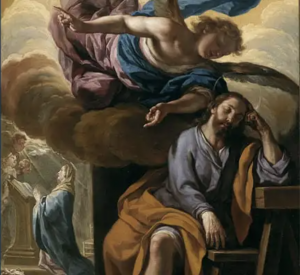
First, the formal engagement to Mary after Joseph discovers that she is pregnant. Joseph knows the baby is not his, and he was in pain knowing Mary’s situation which according to Jewish law would find Mary guilty of adultery, an act that is punishable by death. However, Joseph rescued Mary after he received the message from an Angel.

Second, Joseph is a righteous man who understands the consequence of his action towards Mary. It is through a dream that God reaches out and grasps this righteous man.

Third, it is striking to hear this scripture passage saying, “Do not be afraid to take Mary as your wife.” (Mt.1:19) The angel is inviting Joseph to forsake all that knowledge and understanding to participate in the program of God’s salvation for us.

I believe that we are all a little like Joseph because we have our own ways of dealing with personal, spiritual, and professional matters, and our unique way of going through this demanding season of the year. Perhaps there is a voice we’re already dimly aware of asking us to go beyond our own limitations in order to surrender more fully to God and to assist in the welcoming of a holy child, called Emmanuel; “God is with us” in our own lives and in the life of the Church and in the world.

In today’s Vigil of the Birth of our Lord, let us return to light and take a leap of action to draw us nearer to something we do not fully understand.

God bless you.

Fr. Arlon, osa

The Dictate of the Heart: 3rd Sunday of Advent, Year B

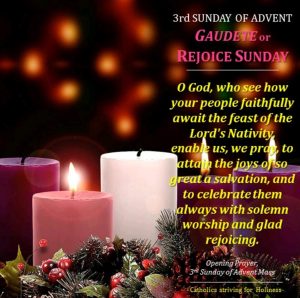
Today is the 3rd Sunday of Advent, Gaudete Sunday. We are closer to our waiting to commemorate Christmas. Rejoice, Gaudete! We have beautiful and inspiring readings which lead us to be joyful and to be filled with rejoicing as suggested to us by St. Paul. When God is with us, we must be joyful which is an indication of God’s true presence.

The first reading today from the book of Isaiah reminds us that “The spirit of the Lord, God, is upon me because the Lord has anointed me, he has sent me to bring glad tidings to the lowly, to heal the brokenhearted, to proclaim liberty to the captives and release to the prisoners, to announce a year of favor from the Lord and a day of vindication by our God.” This is the proclamation of the prophet Isaiah that Jesus will read in the Nazareth temple near the beginning of His public ministry. It speaks about God’s anointment of Jesus as Christ and His mission.

The second reading from the first letter of St. Paul to the Thessalonians says, “In all circumstances give thanks, for this is the will of God for you in Christ Jesus. Do not quench the Spirit. Do not despise the prophetic utterances.” These are inspiring words that we must be grateful for all things, even for things that hurt and break us. This is somewhat difficult; however, we need to find one good thing in the midst of the bad thing or experience we had before. Then we can joyfully say a prayer, “Thank you, Lord, for my suffering, for without going through it I wouldn’t be what I am today.”

The gospel today from the gospel of St. John continues to enlighten us about John the Baptist. Let us learn to get clearer awareness:

First, we hear in today’s reading explicit statements that Jesus, and not John, is the one sent. “He came for testimony, to testify to the light so that all might believe through him, He was not the light, but he came to testify to the light.”

Second, the gospel, is again about John’s being the “witness” and not the Christ. John did not deny it, but admitted, “I am not the Christ.” We could say that our faith dictates with great feeling of happiness to understand that JESUS IS THE MESSIAH, not John. Jesus was heralded by John to make people realize that Jesus is being missioned or sent to be our Savior.

Third, “the one who is coming after me, whose sandal strap I am not worthy to untie.” These humble words of John express who he was and who he was not. There is that temptation that when we don’t know ourselves, about who we are and who we are not, we create our world of make-believe boasting our ego. John was in touch with the reality of who he was.

Therefore, this season of advent is not only anticipating and waiting for the coming of the Lord but coming to our senses that we are totally dependent on God. I certainly believe that God has a purpose for me, but I feel I lack the clarity of understanding my identity, my mission and what God intends for me to do. This thought would not make us happy if we cannot have answers. The joy of Christian living is not what we have right now, but it is connected to the promise of God for us.

Many things get in the way of our really receiving this good news, including our own sense of unworthiness – who are we to receive that kind of love? Let us remember that our primary work is to focus on the joyful witnessing to Christ. We are the poor; we are American dream seekers, who are receiving the glad tidings, and we are the captives being offered liberty. There are reasons for rejoicing because we receive joy and hope from God.

Be courageous in suffering. In hardships, joy will come; after the dark comes the sun. Again, I reiterate in the letter to the Thessalonians we hear, “Rejoice always. Pray without ceasing. In all circumstances give thanks.” John the Baptist is telling the Pharisees and all of us, “There is one among you whom you do not recognize, the one who is coming after me.” That is Jesus who has wrapped us in a cloak of his gentle love, holding us closer to His heart, giving us healing of our deepest hurts and pains. This is the day to Rejoice!

Come, Lord, Jesus, Come!

Fr. Arlon, osa

The Dictate of the Heart: Feast of Our Lady of Guadalupe

I am happy tonight to celebrate the Vigil Mass with you the Hispanic Community of St. Teresa in order to give thanks to God for His continuous blessing bestowed upon us through our Mother Nuestra Senora de Guadalupe. There is only one Mother Mary in the world who was chosen to lead us closer to His Son Jesus Christ.

I am also blessed to have a very supportive community growing in the love and devotion to the Blessed Mother. We must recognize that this feast is not only for the Mexicans, but this is also for the entire Americas, North, South and Central. This is the feast of the United States and also the Philippines because our patroness is also the Virgin of Guadalupe. History recorded that the second batch of missionaries who came to the Philippines were Augustinian Priests from Mexico. They had shared with us your culture and traditions, like POSADAS and Misa de Gallo before Christmas. Not only that, tonight signals the whole world to journey together to have a spiritual pilgrimage to the site of the Blessed Mother Apparition in Mexico. Even if we are celebrating here in this Church, we join thousands of people to venerate and pay homage to Our Lady of Guadalupe! Viva Nuestra Senora de Guadalupe! Viva Cristo Rey!

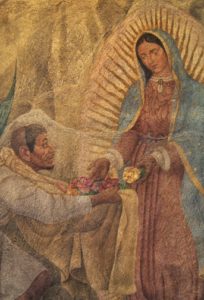
The appearance of the Virgin Mother of Jesus at Guadalupe, near Mexico City, is the event that we remember and the reason we are all here tonight. It was the Blessed Mother who appeared to the peasant and native American man, San Juan Diego. It is one of many events over the centuries that Mary appears to the poor and dispossessed, asking him to speak to the powerful a word of warning. It was a clear statement of God’s favor bestowed on the poor and humble instead of the rich and powerful. It was also a word of warning to power that those who are in power would be struck down and destroyed. When we hear these words, we are given that hope to realize our dreams, that we must be treated equally, opportunity would be opened for everyone and to secure our lives with prosperity safety together with the family. One day we will receive them our constant prayers, sacrifices, and fidelity to our faith as Catholics. All these aspirations will be attained. Though many of us are poor and struggling due to immigration status and other domestic problems, be firm to your faith. I encourage you to bring your family to the Church every Sunday and to encourage others thru your witnessing, good works and to keep the promise of the Blessed Mother of Guadalupe for a greater blessing only to make us closer to her Son, Jesus Christ.

Our liturgy tonight challenges us that the Patroness of the New World, the Americas, especially Mexico that every Mexican must share their Christian Faith and blessing of material wealth and uphold human dignity by virtue of your basic needs being met. I believe that it is not about seeking worldly power because it is almost a guarantee of God’s disfavor. We want to stay blessed and favored with God by being humble.

The readings of the Mass, from the Book of Revelations and the Gospel of Luke, express to us that Mary’s presence is the sign and the voice to manifest the presence of God. The story about Visitation is about how the Blessed Mother obeyed in compliance to God’s will. She made herself available to serve her cousin, Elizabeth with love and humility. Then Elizabeth recognized in her the visible sign of the coming of God when she cried, “Most Blessed are you among women and blessed is the fruit of your womb.” This verse illuminates the role of the pregnant Mary as the bearer of God. My heart wants to sing and rejoice that God is coming to dwell with us through Mary’s cooperation.

We are God’s people!!! So, what is the message of Mary to us all? All of us who are willing to accept our own poverty, our understanding of poverty means our total surrender and dependence on God, our Lady of Guadalupe gives us hope and strength. Now I pray with you tonight so that praying with sincerity of heart, Nuestra Senor de Guadalupe whisper to us that the coming of Emmanuel, God is with us, is indeed God’s mercy. My spirit rejoices in God, my Savior!

Viva la Virgen! Viva San Juan Diego! Viva Cristo Rey! May God bless you.

Fr. Arlon, osa

————————-

El Dictado del Corazón

Fiesta de Nuestra Señora de Guadalupe

  • Apocalipsis 11:19a; 12:1-6a, 10ab
  • Judit 13:18bcde, 19
  • Lucas 1:26-38 o Lucas 1:39-47

Estoy feliz de estar celebrando con ustedes; Comunidad Hispana de Santa Teresa de Avila, a Nuestra Santísima, ¡Virgen de Guadalupe! Démosle gracias a Dios por Su continua bendición otorgada a nosotros a través de nuestra Madre Guadalupana. Sólo hay una Madre María en el mundo que fue elegida para acercarnos a Su Hijo Jesucristo.

Tengo la bendición de tener una comunidad que me apoya y crece en amor y devoción a la Santísima Madre. Debemos reconocer que esta fiesta no es sólo para los mexicanos, sino también para toda América, Norte, Sur y Centro. Esta es la fiesta de Estados Unidos y también de Filipinas porque nuestra patrona también es la Virgen de Guadalupe. La historia registra que el segundo grupo de misioneros que llegaron a Filipinas fueron sacerdotes agustinos de México. Compartieron con nosotros su cultura y tradiciones, como POSADAS y Misa de Gallo antes de Navidad. No solo eso, esta noche es una señal para que todo el mundo viaje juntos en peregrinación espiritual al sitio de la Aparición de la Santísima Madre en México. ¡Aunque estemos celebrando aquí en esta Iglesia, nos unimos a miles de personas para venerar y rendir homenaje a Nuestra Señora de Guadalupe! ¡Viva Nuestra Señora de Guadalupe! ¡Viva Cristo Rey!

La aparición de la Virgen de Guadalupe, cerca de la Ciudad de México, es el evento que recordamos y la razón por la que todos estamos aquí esta noche. Fue la Santísima Madre quien se apareció al campesino y nativo, San Juan Diego. Es uno de los muchos acontecimientos a lo largo de los siglos en los que María se aparece a los pobres y humildes, pidiéndole que se dirija a los poderosos con una palabra de advertencia. Fue una declaración clara del favor de Dios otorgado a los pobres y humildes en lugar de a los ricos y poderosos. También fue una palabra de advertencia al poder de que quienes estaban en el poder serían derribados y destruidos. Cuando escuchamos estas palabras, se nos da la esperanza de realizar nuestros sueños, que debemos ser tratados con igualdad, que se abrirán oportunidades para todos y asegurar nuestras vidas con prosperidad y seguridad junto con nuestra familia. Un día recibiremos nuestras constantes oraciones, sacrificios y fidelidad a nuestra fe como católicos. Todas estas aspiraciones se alcanzarán. Aunque muchos de nosotros somos pobres y luchamos debido a nuestro estatus migratorio y otros problemas internos, seamos firmes en vuestra fe. Los animo a traer a su familia a la Iglesia todos los domingos y a animar a otros a través de su testimonio, buenas obras y a cumplir la promesa de la Santísima Madre de Guadalupe de una bendición mayor sólo para acercarnos más a su Hijo, Jesucristo.

Nuestra liturgia de esta noche nos desafía a que la Patrona del Nuevo Mundo, las Américas, especialmente en México, cada mexicano debe compartir su fe cristiana y la bendición de la riqueza material y defender la dignidad humana en virtud de que se satisfacen sus necesidades básicas. Creo que no se trata de buscar el poder mundano porque es casi una garantía del desagrado de Dios. Queremos seguir siendo bendecidos y favorecidos por Dios siendo humildes.

Las lecturas de la Misa, del Libro del Apocalipsis y del Evangelio de Lucas, nos expresan que la presencia de María es el signo y la voz para manifestar la presencia de Dios. La historia de la Visitación trata de cómo la Santísima Madre obedeció cumpliendo la voluntad de Dios. Se puso a disposición para servir a su prima Isabel con amor y humildad. Entonces Isabel reconoció en ella el signo visible de la venida de Dios cuando exclamó: “Bendita tú entre las mujeres, y bendito el fruto de tu vientre”. Este versículo ilumina el papel de María embarazada como portadora de Dios. Mi corazón quiere cantar y regocijarse de que Dios viene a habitar con nosotros a través de la cooperación de María.

¡¡¡Somos el pueblo de Dios!!! Entonces, ¿cuál es el mensaje de María para todos nosotros? Para todos los que estamos dispuestos a aceptar nuestra propia pobreza, nuestra comprensión de la pobreza significa nuestra total entrega y dependencia de Dios, nuestra Señora de Guadalupe nos da esperanza y fuerza. Me uno en oración con ustedes esta noche, para que orando con sinceridad de corazón, Nuestro Señor de Guadalupe nos susurre que la venida de Emmanuel, Dios con nosotros, es en verdad la misericordia de Dios. ¡Mi espíritu se regocija en Dios, mi Salvador!

¡Viva la Virgen de Guadalupe! ¡Viva San Juan Diego! Viva Cristi Rey! Que Dios te bendiga.

P. Arlón, osa

The Dictate of the Heart: 2nd Sunday of Advent, Year B

I am back to my usual work after my 28-day annual vacation. I must adjust to the cold weather of Carson City and deal with the many scheduled events in the parish. I need to be completely recovered from slight coughing and body aches so that I can celebrate the Latin and the Novus Ordo masses on the feast of the Immaculate Conception and the upcoming Feast of Our Lady of Guadalupe. I need God’s grace of healing.

The first reading from the Prophet Isaiah gives us the real situation of Israel being in captivity. The holy temple in Jerusalem failed to offer comfort for the people. The prophet is inviting the people of Israel to stop raising their voices of guilt so that their need of comfort may be heard. As a people, they have “to go up onto the high mountain” which is the abode of the Divine. “Fear not to cry out and to say to the cities of Judah: Here is your God.” Here comes the Prophet Isaiah shouting to those people feeling alienated and giving hope by informing them of what God is intending to do.

The second reading, the second letter of Peter, tells us in a very simple reminder that “The Lord did not delay His promise,” as some regard “delay,” but He is patient with you, not wishing that any should perish, but that all should come to repentance. This is precisely the reason of Advent, when we are freed from alienation of sins because there is the coming of Jesus, who will rescue us from sins and allow His presence to transform us. I wish we could be better, to shape up and repent.

Today announces the beginning of the gospel of Jesus Christ, the Son of God, according to Mark. There are important reflection points to consider.

First, St. Mark added the quotation from the Prophet Isaiah, “Behold I am sending you my messenger ahead of you, he will prepare your way. A voice of one crying out in the desert; Prepare the way of the Lord.” The coming of the Kingdom of God begins with genuine repentance to become worthy of the Son of Man. Just as we come to embrace this season of Advent, we are called to acknowledge our sins and be reconciled.

Second, St. Mark mentioned how people from “The whole of Judean countryside and Jerusalem” were travelling to have John baptize them “as they acknowledged their sins.” They are called to destroy all kinds of barriers so that they can truly prepare the way for the coming of the Christ. John is baptizing the Jews in the waters of the Jordan claiming their own identity as forgiven to be ushered into God’s Kingdom and be blest in the Holy Spirit.

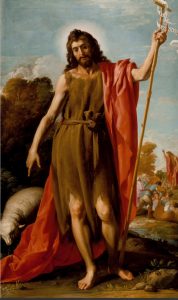
Third, St. Mark tells us very clearly of the role of John the Baptist. John the Baptist says, “I have baptized you with water; he will baptize you with the Holy Spirit.” These humble words of John continued to fulfill his mission to prepare the path of Christ in this world, and he never took advantage of his fame as a precursor.

It is nice to realize that I am called in accordance with the call I have received. All of us need to become like John the Baptist, who helps us think that we cannot do everything, but we will just do our part. Let us not complicate our role in order to shine above others; we need to think what God’s heart has in store for us.

The Good News we must keep in this season of Advent is to listen and to rearrange our ways by keeping the stillness of Christ’s coming guided by St. John the Baptist.

I hope you can take comfort from today’s readings. Let them speak to you by becoming a new person.

Come, Lord, Jesus!

Fr. Arlon, osa

—————————

El Dictado del Corazón

Segundo Domingo de Adviento, Año B

  • Isaías 40:1-5, 9-11
  • Salmos 85:9-10-11-12, 13-14
  • 2 Pedro 3:8-14
  • Marcos 1:1-8

He vuelto a mi trabajo habitual después de estar ausente veintiocho días durante mis vacaciones anuales. Debo adaptarme al clima frío de Carson City y ocuparme de los muchos eventos programados en la parroquia. Necesito recuperarme de una tos leve y dolores corporales para poder celebrar las Misas en latín y Novus Ordo en la Fiesta de la Inmaculada Concepción y la próxima Fiesta de Nuestra Señora de Guadalupe. Necesito de la gracia y la sanación de Dios.

Hermanos y hermanas para la próxima Celebración de la Fiesta de nuestra Virgen de Guadalupe de este año, me gustaría pedirles a todos que oremos por una celebración significativa. Esta es una gran Fiesta y los invito a todos a cooperar y hacer de esta una celebración solemne para que podamos ser destinatarios de las muchas bendiciones por intercesión de nuestra Virgen de Guadalupe. Este próximo martes doce de diciembre hagamos que todas nuestras actividades parroquiales sean ordenadas, pacíficas y con su máxima cooperación para manifestar plenamente nuestro amor por la Virgen de Guadalupe y San Juan Diego. Vendrán también algunos que no vienen regularmente a misa. Como parroquianos, hagamos que se sientan bienvenidos y anímelos a volver a casa. Dentro de la Iglesia, les pido su mayor devoción, silencio y respeto al Santísimo Sacramento.

La primera lectura del profeta Isaías nos da la situación real de Israel en cautiverio. El santo templo de Jerusalén no logró ofrecer consuelo al pueblo. El profeta invita al pueblo de Israel a dejar de alzar sus voces de culpa para que se escuche su necesidad de consuelo. Como pueblo, tienen que “subir a la alta montaña” que es la morada de lo Divino. “No temán gritar y decir a las ciudades de Judá: Aquí está su Dios”. Aquí viene el Profeta Isaías gritando a aquellas personas que se sienten alienadas y dándoles esperanza informándoles de lo que Dios se propone hacer.

La segunda lectura de la segunda carta de Pedro nos recuerda algo muy sencillo “El Señor no retrasó su promesa, como algunos la consideran “retraso”, sino que tiene paciencia con nosotros, no queriendo que ninguno perezca, sino que todos vengan”. al arrepentimiento. Precisamente este es el motivo del Adviento, cuando seamos liberados de la alienación de los pecados porque está la venida de Jesús, quien nos rescatará de los pecados y permitirá que su presencia nos transforme. Ojalá pudiéramos ser mejores, ponernos en forma y arrepentirnos.

Hoy se anuncia el comienzo del evangelio de Jesucristo el Hijo de Dios según Marcos. Hay importantes puntos de reflexión a considerar.

Primero, San Marcos añadió la cita del profeta Isaías: “He aquí que yo envío a mi mensajero delante de ti, a preparar tu camino.  Voz del que clama en el desierto:  “Preparen el camino del Señor, enderecen sus senderos”.. La venida del Reino de Dios comienza con el arrepentimiento genuino para llegar a ser dignos del Hijo del Hombre. Así como llegamos a abrazar esta temporada de Adviento, somos llamados a reconocer nuestros pecados y a reconciliarnos.

En segundo lugar, San Marcos mencionó cómo personas de “toda la campiña de Judea y de Jerusalén” viajaban para que Juan los bautizara “al reconocer sus pecados”. Están llamados a destruir todo tipo de barreras para poder preparar verdaderamente el camino a la venida de Cristo. Juan está bautizando a los judíos en las aguas del Jordán, afirmando su propia identidad como perdonados para iniciar el Reino de Dios y bendecidos con el Espíritu Santo.

En tercer lugar, San Marcos nos habla muy claramente del papel de Juan Bautista. Juan el Bautista dice: Ya viene detrás de mí uno que es más poderoso que yo, uno ante quien no merezco ni siquiera inclinarme para desatarle la correa de sus sandalias. Yo los he bautizado a ustedes con agua, pero él los bautizará con el Espíritu Santo”. Estas humildes palabras de Juan siguieron cumpliendo su misión de preparar el camino de Cristo en este mundo y nunca aprovecharon su fama de precursor.

Es lindo saber que soy llamado de acuerdo con el llamado que he recibido. Todos debemos llegar a ser como Juan el Bautista, quien nos ayuda a pensar que no podemos hacerlo todo, sino que simplemente haremos nuestra parte. No compliquemos nuestro papel para brillar sobre los demás, necesitamos pensar en lo que el corazón de Dios nos tiene reservado.

La Buena Nueva que debemos guardar en este tiempo de Adviento es escuchar, reordenar nuestros caminos manteniendo la quietud de la venida de Cristo guiado por San Juan Bautista.

Espero que puedan encontrar consuelo en las lecturas de hoy. Dejemos que nos hablen convirtiéndonos en personas renovadas en Dios que tanto nos Ama.

¡Ven, Señor Jesús!

P. Arlón, osa

The Dictate of the Heart: 2nd Sunday of Advent, Extraordinary Form, TLM

Today we celebrate the second Advent Sunday. The introit antiphon captures our prayer that we sincerely say, “People of Sion, behold the Lord shall come to save the nations: and the Lord shall make the glory of His voice to be heard, in the joy of your heart.” We are continuously committed to listen to the cries of St. John and the joy to call us to repentance as we prepare for the coming of the Lord.

Today’s epistle from the Letter of St. Paul to the Romans reminds us that we strengthen our hearts and hands to live with patience and hope in these troubled days. St. Paul wants his readers to know that the Church truly participates in God’s unfolding story about the truth that Christ runs from the past to the present, establishing a most certain future. It means that St. Paul argues that the Messiah has achieved what is the entire Old Testament. This season of Advent preserves and proclaims God’s great achievement in Jesus the Son.

Today’s gospel from St. Matthew, which narrates to us that John the Baptist was in prison, sending two of his disciples, should come as an absolute shock to everyone who reads this gospel, wondering if Jesus is indeed the one to come. How could John, of all people, ask a question like “Are you the one who is to come, or shall we look for another?”

Didn’t John leap for joy in the womb at the sound of Mary’s greeting (Luke 1:41)? Wasn’t it his job to prepare the way for the Lord (Isaiah 40:3)? And indeed, did he not point to Jesus and say with his own mouth, “Behold, the Lamb of God, who takes away the sin of the world.” (John 1:29)? Did he not with his own eyes see the dove descend upon Jesus at His baptism, and with his own ears hear the very voice of God from heaven (Matthew 3:16-17)?

How could John even consider asking “Are you the one who is to come, or shall we look for another” (Matthew 11:3)? Something’s up here. Now bear in mind that John was in prison when we read the account about him from the gospel of Matthew 11, and he’s having a real-life nightmare, but instead of waking up, he remains in prison while his head is brought to Herod on a silver platter (Matthew 14:1-12).

God had not abandoned John the Baptist in prison, even though to John it felt like He had. However, St. John the Baptist sent his messengers with the Word of God because he could not go himself. Listen to the example of John the Baptist. Go to the Word of God: Read, hear, and study the Word of God.

Indeed, John knows the answer. He knows Jesus is the Coming One because he has faith. There’s no question John has faith; the question is, does John also have doubt? Yes. Doubt caused John to fear. Doubt caused John to look inward and let his emotions rule him, ­working himself into an emotional frenzy as he was literally preparing the way for Christmas, the Messiah’s 1st Coming. But faith doesn’t look in, faith looks out. In faith, John did what you and I need to do when we doubt: go to Jesus, and since neither John nor you and I can physically do that, we need Jesus’ Word to be brought to us. So John sent his disciples to bring the Word of Jesus back to him, to preach to him, because it’s only the

Word of Jesus that can strengthen, comfort, reassure, and encourage us. John wants to hear the Word of Jesus reassuring him that He is the Coming One, and that’s what Jesus does. Working yourself up into an emotional frenzy at Christmas over the gifts, the cute baby in a manger, and the holiday spirit won’t do a thing to prepare you. But the Gospel and sacraments will.

Blessed indeed are all who take refuge in Him, who find joy in feasting with Him at His Table with angels, archangels, the Holy Innocents, St. John the Baptist, Sts. Stephen and James, Sts. Peter and Paul and all those who rest in Christ. Let us give thanks to the Lord our God, indeed!

God bless you.

Fr. Arlon, osa

La Inmaculada Concepción de la Santísima Virgen María

Lucas 1:26-38

Hace dos años compuse un himno de la Iglesia Católica de la Inmaculada Concepción en Sparks, NV, donde había sido asignado anteriormente. Agradezco a la Santísima Madre que me inspiró a ponerle letra a la canción. Estoy muy sentimental con esta solemnidad de la Inmaculada Concepción porque fue cuando hice mi primera misa después de mi ordenación hace treinta y tres años. La Santísima Madre se convierte en mi madre que está tan cerca de mi corazón porque sé que ella siempre está ahí cuando más la necesito. Es inimaginable para cualquier sacerdote sin la protección materna de la Santísima Madre porque un sacerdote es un “Alter Christus”, el otro Cristo. Nuestro Señor Jesús está muy cerca del corazón de Su madre. María dijo: “He aquí yo soy la esclava del Señor. Que se haga en mí según tu palabra”. Ella es fiel en cumplir la palabra de Dios que todos debemos hacer.

It was two years ago that I composed the hymn of the Immaculate Conception Catholic Church, Sparks, NV where I was assigned. I thank the Blessed Mother who inspired me to put words into the song. I am very sentimental with this solemnity of the Immaculate Conception because it was when I did my first mass after my ordination 33 years ago. The Blessed Mother becomes my mother who is so close to my heart because I know that she is always there when I need her. It is unimaginable for any priest without the maternal protection of the Blessed Mother because a priest is an “Alter Christus,” the other Christ. Our Lord Jesus is very close to the heart of His mother. Mary said, “Behold, I am the handmaid of the Lord. May it be done to me according to your word.” She is faithful to fulfill God’s word which we all must do.

Hoy celebramos el triunfo de la misericordia de Dios al preparar a María, la elegida, desde el vientre de su madre, Santa Ana. Ella fue concebida inmaculadamente sin ninguna mancha de pecado. María estuvo llena de la gracia de Dios desde el primer momento de su existencia. A lo largo de su vida, María Santísima siempre ha estado totalmente vuelta hacia Dios, completamente abierta a la llamada de Dios y a su presencia.

Today, we celebrate the triumph of God’s mercy as He prepared Mary, the chosen one, from the womb of her mother, St. Anne. She was immaculately conceived without any stain of sin. Mary was full of God’s grace from the first moment of her existence. Throughout her life, Blessed Mary has always been totally turned towards God, completely open to God’s call and His presence.

La lectura del evangelio de hoy nos lleva a muchos puntos de reflexión y meditación:

Primero, sugiere que María luchó por recibir este extraordinario favor de Dios y por todo lo que implicaría para su especial misión en la Historia de la Salvación. En el Libro del Génesis, nuestros primeros padres, Adán y Eva, no pudieron resistir la tentación de comer del árbol prohibido. A pesar de las muchas maneras en que Dios los había bendecido en el jardín, tomaron más de lo que tenían derecho. Habiendo rechazado de esta manera la voluntad de Dios, se escondieron de Dios. Fue un vergonzoso acto de orgullo que los llevó a pensar que eran dioses. Por lo tanto, para restaurar esas relaciones rotas entre los hombres y Dios, fue un momento oportuno en que Dios nos buscó de regreso a Él a través del corazón misericordioso de la Santísima Madre para cooperar con Su plan.

Today’s gospel reading is leading us to many points for reflection and meditation:

First, it suggests that Mary struggled to receive this extraordinary favor from God and for all it would entail for her special mission in the Salvation History. In the Book of Genesis, our first parents, Adam and Eve, could not resist the temptation to eat from the forbidden tree. Despite all the many ways that God had blessed them in the garden, they took more than they were entitled to. Having rejected God’s will in this way, they hid from God. It was a shameful act of pride that led them to think that they were gods. Thus, to restore those broken relationships between men and God, it was an opportune time that God sought us back to Him through the gracious heart of the Blessed Mother to cooperate with His plan.

En segundo lugar, cuando Madre María se entregó a través de su “Fiat”, su Sí a Dios, se convirtió en fuente de bendición para toda la humanidad, la elegida a través de la cual Jesús vino a nosotros. Como María, debemos entregar nuestras vidas a Dios que tanto nos ha favorecido, permitiendo que Dios obre en nosotros y a través de nosotros. A través de nuestra entrega total, nosotros también damos a luz a Cristo en nuestras vidas convirtiéndonos en fuente de bendición para los demás.

Second, when Mother Mary surrendered through her “Fiat,” her Yes to God, she became a source of blessing to all of humanity, the chosen one through whom Jesus came to us. Like Mary, we are to surrender our lives to God who has so favored us, allowing God to work in and through us. Through our complete surrender, we too give birth to Christ in our lives becoming a source of blessing for others.

En tercer lugar, la santidad y la bondad de María son producto de su apertura a la palabra de Dios y al llamado de Dios que vivió en medio de los desafíos y luchas por comprender el mensaje de un ángel que le dijo: “No temas, María, porque has hallado gracia ante Dios. Vas a concebir y a dar a luz un hijo y le pondrás por nombre Jesús.” Por su gracia especial, recibe una relación íntima con su Hijo concebido a través del Espíritu Santo, que penetró su corazón humano.

Third, Mary’s holiness and goodness is a product of her openness to God’s word and God’s call which she lived out amid the challenges and struggles to understand the message of an Angel who said to her, “Do not be afraid, Mary, for you have found favor with God. Behold, you will conceive in your womb and bear a son, and you shall name him Jesus.” Because of her special grace, she receives an intimate relationship with her conceived Son through the Holy Spirit, who penetrated her human heart.

Hermanos y hermanas, ofrezcámonos haciendo lo que Dios nos pide y abriéndonos más completamente a la palabra de Dios y a la voluntad de Dios para nuestras vidas. Mientras tratamos de responder al mismo llamado, podemos buscar en María quien es nuestra Madre, nuestra inspiración y ayuda. Así como María tuvo una experiencia humana más oscura debido al rechazo de la humanidad hacia su Hijo Jesús, ella permaneció completamente en la palabra vivificante de Dios.

Brothers and Sister, let us offer ourselves over by doing what God asks of us and opening ourselves more completely to God’s word and God’s will for our lives. As we try to answer the same call, we can look to Mary for inspiration and for help. Just as Mary had an experience of a darker human experience because of humanity’s rejection of her Son, Jesus, she completely remained to God’s life-giving word.

Este tiempo de Adviento nos llama a ser tan abiertos como María a la fidelidad de su misión, incluso en nuestros tiempos de dolorosa lucha. Si seguimos confiando en el plan de Dios, hay ese cumplimiento y también nos convertimos en fuente de bendiciones para los demás y el mundo.

This season of Advent calls on us to be as open as Mary to her fidelity of her mission, even in our own times of painful struggle. If we keep on trusting in the plan of God, there is that fulfillment and we also become the source of blessings for others and the world.

María fue concebida sin pecado y sostenida aún más a través de estas palabras de nuestro Padre San Agustín: “Porque el único entre los nacidos de mujer fue nuestro Santo Señor Jesús, quien por la extrañeza de Su nacimiento sin mancha no sufrió las contaminaciones de la corrupción terrenal sino los disipó por majestad celestial”. (FC, Vol. 30, Cartas de San Agustín 165-203)

“Oh María, sin pecado concebida, ruega por nosotros que recurrimos a ti”.

Mary was conceived without sin and further upheld through these words of our Father St. Augustine, “For wholly alone of those born of woman was our Holy Lord Jesus, who by the strangeness of His undefiled Birth has not suffered the pollutions of earthly corruption but dispelled them by heavenly majesty.” (FC, Vol. 30, Saint Augustine Letters 165-203)

“O Mary, conceived without sin, pray for us who have recourse to thee.”

Padre Arlon, OSA

The Dictate of the Heart:  1st Sunday of Advent, Year B

  • Isaiah 63:16-17, 19
  • Psalm 80:2-3, 15-16, 18-19
  • 1 Corinthians 1:3-9
  • Mark 13:33-37On late Friday evening on December 1, 2023, I arrived from a month vacation in the Philippines, rejuvenated and refreshed from eating my favorite tropical fruits and the renewal of relationships with my brothers, sister, nephews, nieces and with my Augustinian confreres.

    Today is the first Sunday of Advent; however, in the Philippines, people started decorating Christmas trees with snowballs and snowmen even though we don’t have snow.  Christmas songs are on the air, and they put up Christmas “parols” or lighted lanterns along the streets, and the Nativity scene inside the house as early as September.  Filipinos’ major feast is Christmas, and it is also our Thanksgiving Day.  Filipinos don’t want to live in the wait, so they over emphasize anticipation of the coming of Christmas.  I know Christmas is coming but not as early as September or today, the first Sunday of Advent.

    The Sunday readings today call us to be conscious of where we are in our relationship with God.  The first reading from the Book of the Prophet Isaiah wants to remind us that in this season of Advent, we must renew our relationship with God.  The Prophet Isaiah is pointing us to God, our Father and Redeemer, and letting us focus on how God works in our hearts.  God has called us so that we are in the right place. He sustained us with gifts, but all the goodness of God must be acknowledged and responded to that we are deeply willing for His coming in our lives again.  If we have difficulty in trying to connect with God, we journey with the Prophet Isaiah’s struggle, who admits that we have created a mess in our lives, but just as God has tried to reconnect with His people, we must also intend to try our best to be with God.

    The 2nd reading from the letter of St. Paul to the Corinthians is inspiring to be always grateful.  St. Paul says, “I give thanks to my God always on your account for the grace of God bestowed on you in Christ Jesus…..so that you are not lacking in any spiritual gift as you wait…”  These words of St. Paul bring to our attention that the consolations of God, peace, kindness, and mercy, are actually given to us, which manifests God’s faithfulness and, therefore, calling us to fellowship, to communion.

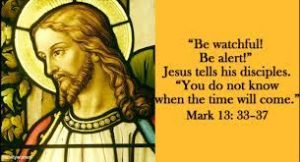
    The gospel of St. Mark expresses the need to “Be watchful! Be alert!”  To be watchful is to foresee the coming of the Lord. Even though, Jesus says, “You do not know when the time has come.”  But we must wait for that time and be alert, as we are warned that something will certainly happen.  It is through faith and confidence that there will be an end to our waiting.

    As Catholic, how am I to be in the waiting?  First, the Catholic Church teaches that Advent is a time of waiting, anticipation, expectation, joy and preparation for the coming of Jesus, the promised Messiah.  It is a season of looking forward to something wonderful, the promise of the ages. It is a waiting time focused on the future return of our Savior by looking back to when He first came and lived with us in history.  This is a glance of the past which is connected to His second coming.  It means Someone is coming and something will be an exceedingly new experience as He promised.

    Second, the responsorial psalm today which says, “Lord, make us turn to you. Let us see your face and we shall be saved,” is a plea, our desperate admission that we really need help from the coming of the Son of Man who will give us new life when we call upon Him.  Through this, man at God’s right hand, will bring back all of us to God, who favors our salvation.

    Third, in the gospel today, we do find ourselves like servants left behind to carry out tasks while the Master of the household is apparently absent.  It means that we are taking that responsibility to perform our work well.  We are expected to be alert and awake for the Master’s return, for at anytime He will come when we least expect.

    This season of Advent is a season to extend more time in prayer.  Prayer is truly necessary to come into our consciousness that we need God in our lives.  Let us allow God to enter our hearts and our world.  We are divided and lost.  This is the time for making profound preparations and offering sacrifices so that at the right time of Christ’s coming, He will restore us through His divine healing and forgiveness.  If you are still sleeping, God waits for you!  There is something better for you.

    Maranatha, Jesus come and bless us.

    Fr. Arlon, osa

    ————————

El Dictado del Corazón

Primer Domingo de Adviento, año B

  • Isaías 63:16-17, 19
  • Salmo 80:2-3, 15-16, 18-19
  • 1 Corintios 1:3-9
  • Marcos 13:33-37

Hace dos días regrese de un mes de vacaciones en las Filipinas. Me siento rejuvenecido y renovado. Tuve la oportunidad de comer mis frutas tropicales favoritas,ponerme al día con mis hermanos, hermanas, sobrinos, sobrinas y cohermanos agustinos. 

Hoy es el primer domingo de Adviento. En las Filipinas, la gente ha comenzado a decorar sus árboles Navideños con bolas de nieve y muñecos de nieve a pesar de que no hay nieve. Se escuchan canciones navideñas y ya en septiembre se colocan farolillos navideños en las calles y el Belén en el interior de las casas. La fiesta principal de los filipinos es la Navidad y también es nuestro Día de Acción de Gracias. Los filipinos no quieren vivir esperando, por lo que enfatizan demasiado la anticipación de la llegada de la Navidad. Sé que la Navidad se acerca, pero no tan pronto como en septiembre ni hoy, el primer domingo de Adviento.

Las lecturas dominicales de hoy nos llaman a ser conscientes de dónde estamos en nuestra relación con Dios. La primera lectura del Libro del Profeta Isaías nos recuerda que en este tiempo de Adviento debemos renovar nuestra relación con Dios. El profeta Isaías nos señala a Dios, nuestro Padre y Redentor, nos permite concentrarnos en cómo Dios obra en nuestros corazones. Dios nos ha llamado para que estemos en el lugar correcto. Él nos sostuvo con dones, pero toda la bondad de Dios debe ser reconocida y respondida para que estemos profundamente dispuestos a que Él venga nuevamente a nuestras vidas. Si tenemos dificultades para intentar conectarnos con Dios, caminamos con la lucha del profeta Isaías, quien admite que hemos creado un desastre en nuestras vidas, pero, así como Dios ha tratado de reconectarnos con su pueblo, nosotros también debemos intentar nuestra conexión lo mejor con Dios.

La segunda lectura de la carta de San Pablo a los Corintios nos inspira a estar siempre agradecidos. San Pablo dice: “Doy siempre gracias a mi Dios por la gracia de Dios que nos ha sido concedida en Cristo Jesús… para que ningún don espiritual les falte en la espera…” Estas palabras de San Pablo nos llaman la atención que nos son dados los consuelos de Dios, la paz, la bondad y la misericordia, lo que manifiesta la fidelidad de Dios y, por tanto, nos llama a la comunión.

El evangelio de San Marcos expresa la necesidad de “¡Estar alerta!” Estar alerta es prever la venida del Señor. Aunque Jesús dice: “No saben cuándo ha llegado el momento”. Pero hay que esperar ese momento y estar alerta, ya que se nos advierte que con seguridad algo sucederá. Es a través de la fe y la confianza que nuestra espera pondrá fin.

Como católico, ¿cómo debo estar en la espera? Primero, la Iglesia Católica enseña que el Adviento es un tiempo de espera, anticipación, expectación, gozo y preparación para la venida de Jesús, el Mesías prometido. Es una temporada en la que esperamos algo maravilloso, la promesa de todos los tiempos. Es un tiempo de espera centrado en el futuro regreso de nuestro Salvador, mirando hacia atrás, cuando Él vino por primera vez y vivió con nosotros en la historia. Esta es una mirada al pasado que está conectada con su segunda venida. Significa que Alguien viene y algo será una experiencia sumamente nueva como Él prometió.

En segundo lugar, el salmo responsorial de hoy que dice: “Señor, haznos acudir a ti. Veamos tu rostro y seremos salvos”, es una súplica, nuestra admisión desesperada de que necesitamos ayuda de la venida del Hijo del Hombre que nos dará nueva vida cuando lo invoquemos. Mediante esto, el hombre a la diestra de Dios, nos traerá a todos de regreso a Dios, quien favorece nuestra salvación. 

En tercer lugar, en el evangelio de hoy nos encontramos como sirvientes dejados atrás para realizar tareas mientras el dueño de la casa está ausente. Significa que estamos asumiendo esa responsabilidad de realizar bien nuestro trabajo. Se espera que estemos alerta y despiertos para el regreso del Maestro, porque en cualquier momento Él vendrá cuando menos lo esperemos.

Esta temporada de Adviento es una temporada para extender más tiempo en oración. La oración es verdaderamente necesaria para tomar conciencia de que necesitamos a Dios en nuestras vidas. Permitamos que Dios entre en nuestros corazones y en nuestro mundo. Estamos divididos y perdidos. Este es el momento de hacer profundos preparativos y ofrecer sacrificios para que en el momento oportuno de la venida de Cristo, Él nos restaure a través de Su divina sanidad y perdón. Si aún estás durmiendo, ¡Dios te espera! Hay algo mejor para ti.

Maranata, Jesús ven y bendícenos.

P. Arlón, osa

The Dictate of the Heart: First Sunday of Advent: Extraordinary Form, TLM

I am blessed meeting pious women in Manila. They are faithful traditional Latin Mass church-goers who invited me to celebrate the Extraordinary Form. I spent half day with them sharing the word, sacrament and the meaning of the mass. Gaining friends is indeed instilled in my Augustinian way or life: Friends and companions for the Lord.

Today marks the beginning of the Church Liturgical Calendar, the first Sunday of Advent. In the liturgy of Advent, we will be hearing a lot from the gospel about the coming of the Lord. But the gospel passage assigned for the first Sunday in Advent, this does not come to terrify us. It comes from near the end, as Jesus is preparing his disciples for the time when he will no longer be with them in the flesh. Jesus has come to Jerusalem for one purpose only: to give his life for the redemption of us all. His earthly ministry is nearing its completion, and he knows it.

We heard from the gospel of St. Luke that “There will be signs in the sun, the moon, and the stars, and on the earth distress among nations confused by the roaring of the sea and the waves. People will faint from fear and foreboding of what is coming upon the world, for the powers of the heavens will be shaken. Then they will see ‘the Son of Man coming in a cloud’ with power and great glory. Truly I tell you, this generation will not pass away until all things have taken place. Heaven and earth will pass away, but my words will not pass away. “Be on guard so that your hearts are not weighed down with dissipation and drunkenness and the worries of this life, and that day does not catch you unexpectedly, like a trap. For it will come upon all who live on the face of the whole earth. Be always alert, praying that you may have the strength to escape all these things that will take place, and to stand before the Son of Man.” (Luke 21:25-36)

What does this gospel mean to us? I guess this is a warning to be vigilant and alert so that the coming of the Lord does not catch us off-guard. This is why we hear these words during Advent. We are in the season of preparation for the coming of Christ. We are not only anticipating the celebration of Christmas, but we too are also anticipating Christ’s coming in glory to the fulfillment of God’s kingdom. It brings us Hope.

I invite you to reflect these two important points:

First, Jesus says, “People will faint from fear.” However, it is not words to make us afraid because during the olden times, human encounter with God and hearing His voice had been very intense but Jesus reveals God’s compassion and many times in the scriptures we usually hear “Fear Not and Do not be afraid,” which are the assuring words of Jesus to his disciples because he knows that people will faint from fear. I believe that the encounter of the Divine can be a lot scary. Jesus wants to calm us down.

Second, Jesus likes to illustrate the sign of the fig tree, He curses it for not bearing fruits. This parable coming from the evangelist St. Luke tells us about the unpredictable character of a fig tree’s growth cycle just like the coming of the Son of Man. We have heard many things about the coming of the “rapture” or the end of the world. We heard many times, but we are already used to hear that warning but unfortunately it did not happen. Only God knows.

Remember that in the gospel of John, Jesus called Nathanael sitting under the fig tree. In the scripture sitting under the fig tree is a sign of peace and prosperity. This is what we should do to sit comfortably under the fig tree. And maybe the point Jesus is trying to makeis by lifting our hearts and mind to God in prayer. Jesus has already come in our midst; His redemption has come and God is near.

God’s salvation is close enough for those who are faithful because Christ’s presence is with you. God’s coming on earth and who lived with us in history is the reason of hope. I do believe that advent is not only about remembering Christ’s coming but rather His presence is the reason of HOPE, for heaven and earth will pass aways but His words will never expire.

Let us magnify the Lord, by examining our unhealthy patterns of behavior. Just focus our energy on following Jesus so closely and be an example to others. We must endure that hope so that we can share the love of Christ, we must come to experience relating with people who need Christ’s love.
God bless you.

Fr. Arlon, osa

The Dictate of the Heart: 31st Week in Ordinary Time, Wednesday: The Commemoration of All the Faithful Departed (All Souls Day)

Today, we celebrate All Souls Day. Many Protestant brethren believe that after death, there is no way to alter the fate of those who died. They believe that at the point of death, one’s eternal destiny is confirmed. Either he is saved through faith in Christ and is in heaven where he is experiencing rest and joy in God’s presence, or he is in torment in hell. No amount of prayer would deliver them from damnation. Whatever the state of one’s soul, that’s it. They say, “once the person is gone, they’re gone.” Hence, no more prayers would aid the soul for salvation. Death is final, and after that, no amount of praying will avail a person of the salvation he has rejected in life. I believe this is a very sad perspective, thinking that our prayers would be completely futile. That is the reason why they don’t pray for the dead; they believe that their prayer service is to help the grieving family. Their dead are completely on their own, no more hope or more love. Let them find their way, others would say.

Catholic faith is totally different. There is always room for our deceased brethren to be saved by God’s mercy. We remember them every November 2nd, offering prayers for their salvation every All-Souls’ Day. We offer novenas on their death anniversary in order to gain eternal repose, and the highest form of prayer is to offer mass for our departed brothers and sisters. To justify this religious practice is connected with keeping the chief commandment of God, “Love God above all and love your neighbor as yourself.” Love is not only shared with those who are living. Our love for our neighbors is beyond death and an integral part to practice charity towards our neighbors. Jesus did not say love only those who are alive. Therefore, our love is forever, as long as we live. There is no stopping the manifesting of love for each other.

We cannot make any judgment of any person who has died, even knowing how much they had done bad things. We must remember that every person does something good in life. If we now think that our prayer won’t help because you have known someone to be an evil person, just believe that God’s mercy is immense.

It is a holy and pious thought to pray for the dead (2 Mc 12:44-45). Those in heaven or in hell don’t benefit from our prayers, because the souls that are already in heaven are enjoying the eternal bliss of God, and those in hell are already condemned. However, we need to understand that not everyone immediately goes to heaven or hell after they die. Therefore, when we pray for the dead, we must be praying for people in some other place usually called “purgatory,” which other religions do not accept.  As Catholics, we accept that there is a state of purging and purification. If the souls we are praying for are destined to hell, we believe our prayers won’t be wasted because of the idea that there is the “treasury of prayers” which would be applied to those poor souls who have no one to pray for them.

As early as first century Christians, in catacombs and other graves, they put an inscription, “ PAX TIBI, SPIRITUI TUO, IN AETERNUM, TIBI CUM ANGELIS, CUM SANCTIS.” All these words were written and uttered to signify prayers for the dead.

Today’s Scriptural readings give us great comfort for accepting our own mortality. The Book of Wisdom expresses consolation into our hearts, “The souls of the just are in the hand of God.” In today’s gospel, Jesus says, “And this is the will of the one who sent me, that I should not lose anything of what he gave me, but that I should raise it on the last day.” We are supported by God’s words and encouraged in hope. We do not fully comprehend this reality, but we know that it is something greater and more powerful than anything else we have known, the great love and mercy of God. For Him, no one is lost.

Then, St. Paul prayed for the Dead, 2 Timothy 1:16-18 “May the Lord grant mercy to the household of Onesiphorus, for he often refreshed me; he was not ashamed of my chains, but when he arrived in Rome he searched for me eagerly and found me, may the Lord grant him to find mercy from the Lord on that Day – and you well know all the service he rendered at Ephesus.”

Today, let us spend time praying for all our departed Brothers and Sisters who have died so that their souls will be in the hands of God. Being with God, no torment can touch them. There is no more suffering, pain or worries because we believe that God takes good care of them and comforts them as well. They are at peace.

“Eternal rest grant unto them, O Lord, and let perpetual light shine upon them. May their souls and the souls of all the faithful departed, through Your mercy, rest in peace. Amen.”

May they rest in peace. God bless you.

Fr. Arlon, osa

—————————-

El Dictado del Corazón:

La Conmemoración de Todos los Fieles Difuntos (Día de Todos los Difuntos)

Sabiduría 3:1-9 Salmo 23:1-3A, 3B-4, 5, Romanos 6:3-9 Juan 6:37-40

Hoy celebramos el Día de Todos los Fieles Difuntos. Muchos hermanos protestantes creen que después de la muerte, no hay forma de alterar el destino de quienes han muerto. Creen que, en el momento de la muerte, se confirma el destino eterno de la persona. O es salvado por la fe en Cristo y está en el cielo, donde experimenta descanso y gozo en la presencia de Dios, o está atormentado en el infierno. Dicen: “Una vez que la persona se va, se va”. Por lo tanto, ya no habrá más oraciones que ayuden al alma a alcanzar la salvación. La muerte es definitiva, y después de eso, ninguna oración por mucho que ore le servirá a la persona para obtener la salvación que ha rechazado en vida. Creo que esta es una perspectiva muy triste, pensar que nuestras oraciones serían completamente inútiles. Por eso no rezan por los muertos; Creen que su servicio de oración es para ayudar a la familia en duelo. Sus muertos están completamente solos, sin más esperanza ni más amor. Que encuentren su camino, dirían otros.

La fe católica es diferente. Siempre hay lugar para que nuestros hermanos fallecidos sean salvados por la misericordia de Dios. Los recordamos cada dos de noviembre, ofreciendo oraciones por su salvación cada Día de los Fieles Difuntos. Ofrecemos novenas en el aniversario de su muerte para obtener el descanso eterno, y la forma más elevada de oración es ofrecer misa por nuestros hermanos y hermanas difuntos. Justificar esta práctica religiosa está relacionado con guardar el principal mandamiento de Dios: “Ama a Dios sobre todo y ama a tu prójimo como a ti mismo”. El amor no sólo se comparte con quienes están vivos. Nuestro amor por nuestro prójimo está más allá de la muerte y es una parte integral de la práctica de la caridad hacia nuestro prójimo. Jesús no dijo ama sólo a los que están vivos. Por lo tanto, nuestro amor es para siempre, mientras vivamos. No hay forma de detener la manifestación del amor mutuo.

No podemos emitir ningún juicio sobre ninguna persona que haya muerto, incluso sabiendo cuánto había hecho cosas malas. Debemos recordar que cada persona hace algo bueno en la vida. Si ahora pensamos que nuestra oración no ayudará porque hemos conocido a alguien que es una persona malvada, simplemente hay que creer que la misericordia de Dios es inmensa.

Es un pensamiento santo y piadoso orar por los muertos (2 Mc 12,44-45). Los que están en el cielo o el infierno no se benefician de nuestras oraciones, porque las almas que ya están en el cielo están disfrutando de la bienaventuranza eterna de Dios, y las que están en el infierno ya están condenadas. Sin embargo, debemos entender que no todo el mundo va inmediatamente al cielo o al infierno después de morir. Por lo tanto, cuando oramos por los muertos, debemos orar por personas en algún otro lugar generalmente llamado “purgatorio”, cuya enseñanza otras religiones no pueden aceptar. Como católicos aceptamos que existe un estado de purga y purificación. Si las almas por las que oramos están destinadas al infierno, creemos que nuestras oraciones no serán en vano debido a la idea de que existe el “tesoro de las oraciones” que se aplicaría a aquellas pobres almas que no tienen a nadie que oren por ellas.

Ya en el siglo I, los cristianos colocaban en catacumbas y otras tumbas una inscripción: “PAX TIBI, SPIRITUI TUO, IN AETERNUM, TIBI CUM ANGELIS, CUM SANCTIS”. Todas estas palabras fueron escritas y pronunciadas para significar oraciones por los muertos. Las lecturas de las Escrituras de hoy nos brindan un gran consuelo al aceptar nuestra mortalidad. El Libro de la Sabiduría expresa consuelo en nuestros corazones: “Las almas de los justos están en manos de Dios”. En el evangelio de hoy, Jesús dice: “Y esta es la voluntad del que me envió: que no pierda nada de lo que me dio, sino que lo resucite en el día postrero”. Nos apoyan las palabras de Dios y nos alientan la esperanza. No comprendemos completamente esta realidad, pero sabemos que es algo más grande y poderoso que cualquier otra cosa que hayamos conocido, el gran amor y misericordia de Dios. Para Él nadie está perdido.

También San Pablo oró por los difuntos, 2 Timoteo 1:16-18 “Que el Señor tenga misericordia de la casa de Onesíforo, porque él me dio refrigerio muchas veces; él no se avergonzó de mis cadenas, pero cuando llegó a Roma me buscó ansiosamente y me encontró, que el Señor le conceda hallar misericordia del Señor en aquel Día – y bien sabéis todo el servicio que prestó en Éfeso. ”

Hoy, dediquemos tiempo a orar por todos nuestros hermanos y hermanas que han fallecido, para que sus almas estén en las manos de Dios. Estando con Dios, ningún tormento puede tocarlos. Ya no hay sufrimiento, dolor ni preocupaciones porque creemos que Dios los cuida bien y también los consuela. Están en paz.

“Concédeles, oh, Señor, el descanso eterno, y brille para ellos la luz perpetua. Que sus almas y las de todos los fieles difuntos, por tu misericordia, descansen en paz. Amén.”

Dios los bendiga.